Resources

2026 Beer Branding Trends Review

Strategic insights to help your brewery stay relevant, evolve and win in a changing category

Hi there, and welcome to CODO Design’s 2026 Beer Branding Trends Review.

We’re CODO — a food and beverage branding firm based in Indianapolis, Indiana. Over the last 16+ years, we’ve worked with nearly 100 breweries (98 to date) around the world, from scrappy taproom upstarts to regional powerhouses.

Each year, we use this report to pause, take stock and reflect on what we’re seeing in our field work across the beer and beverage alcohol space — from the projects we’re working on, to broader shifts in the market, to the questions our clients are asking behind the scenes.

The mood in beer today is complicated. Openings have slowed. Closures are mounting. The buzz is quieter, and the hard conversations are getting louder. It would be easy to feel crushed by the doom and gloom.

But there are bright spots, too. Smart plays. Big bets that are starting to pay off.

This isn’t an industry hype piece. It’s a chance to zoom out, get a clearer view of the landscape, and make more strategic decisions — whether you’re planning a rebrand, repositioning a product, evolving your portfolio, exploring new categories or just trying to keep your taproom busy on a Wednesday night.

Thanks for being here. A little bit of housekeeping and then we’ll get into it. 

A few notes before we dive in: 


#1 

We’ve pulled the most important sections from this year’s Beer Branding Trends Review and are sharing them exclusively with newsletter subscribers:


Small beer, big opportunity?
The evolving role of style names in brand positioning
The hidden risk of launching an NA brand
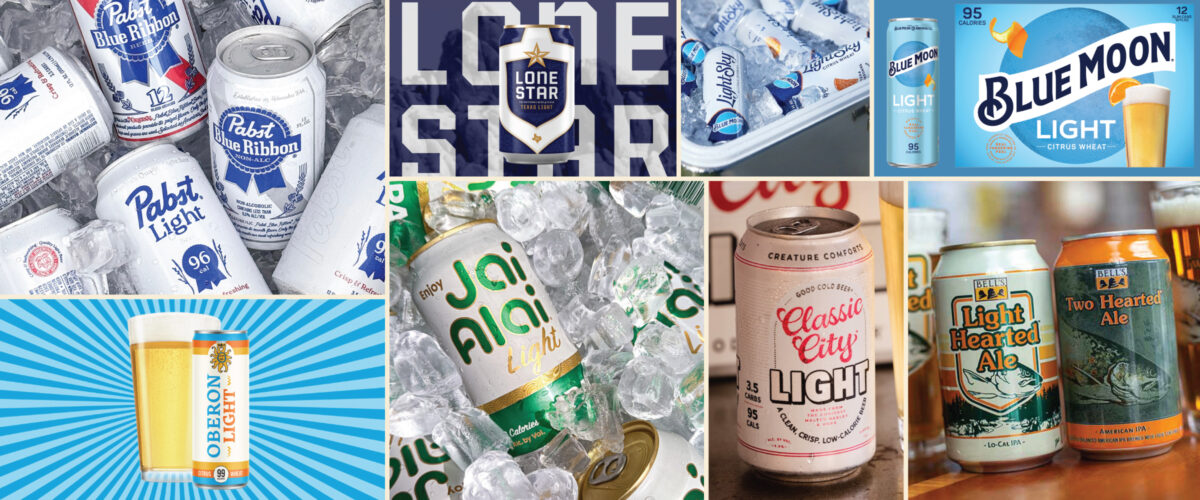
The rise — and risk — of light flagship extensions
Function 2.0
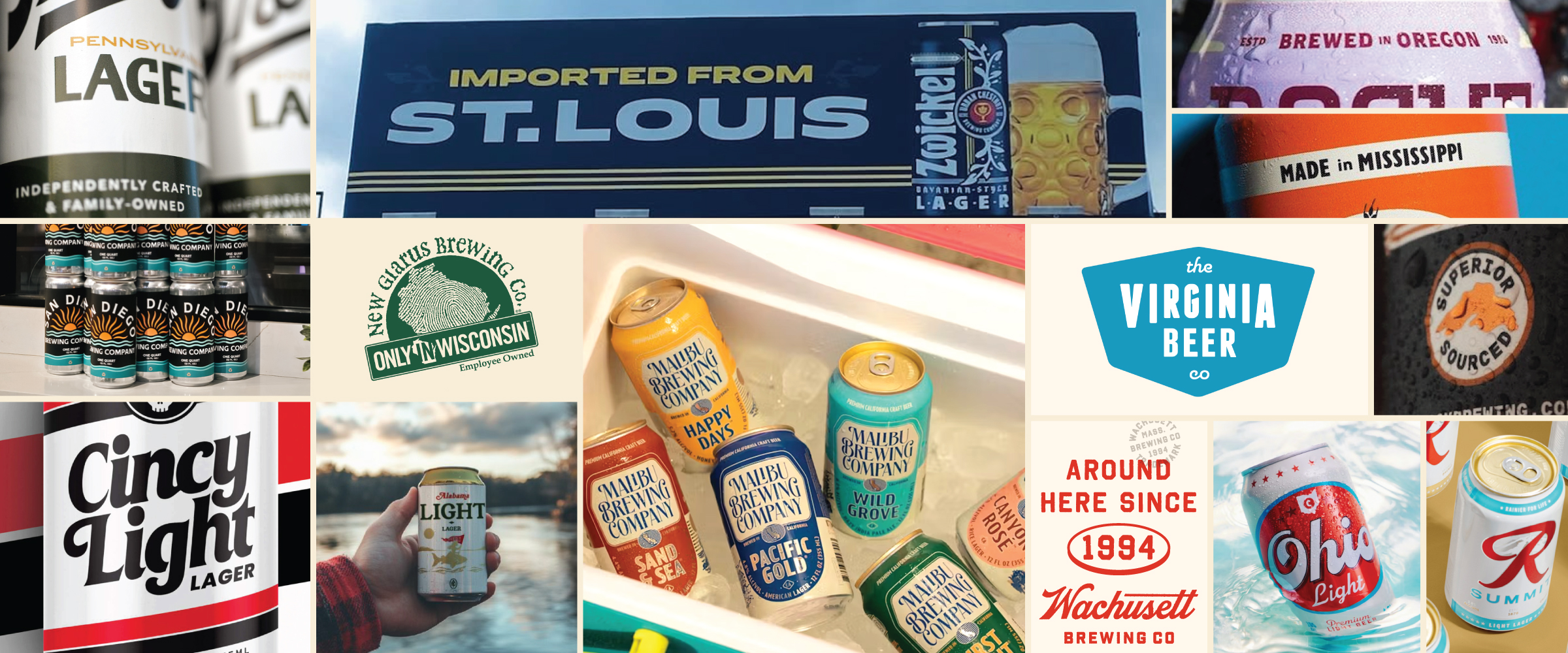
The case for — and against — hyper-provenance
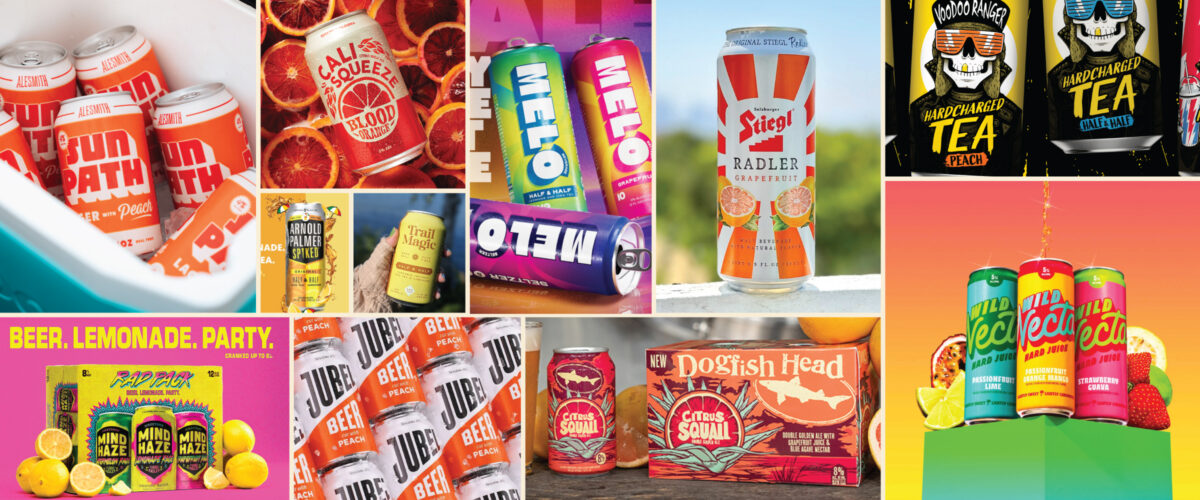
The Half & Half Opportunity
The surprising power of nostalgia in beer branding 


Join more than 10,000 beer and beverage pros already reading BBT and get these insights first:

Build a stronger brand.
Sell more beer.

Join 7,500+ other beer industry folks and sign up for CODO’s monthly Beer Branding Trends Newsletter.

#2 

We’ve released a companion podcast on this year’s review over on the Beer Branding Trends podcast. Give this a spin for more background context on what we see shaping beer and Bev Alc right now.


#3 

If you’d like to discuss any of the strategies we present in this report or explore how CODO can help you build a stronger brand and sell more beer, email Isaac.


#4

Think of this report (~25,000+ words) as a choose your own adventure experience. Click on any of the following links to skip ahead to a particular section:

Section 1: Brewery Brand & Portfolio Strategy


This section looks at the strategic conversations we’re having with breweries and Bev Alc brands across the country. From why so many breweries are rebranding to how portfolios are evolving in the face of slowing demand, these are the decisions that will shape the next decade.

Let’s start with why so many breweries are exploring rebrands or brand refreshes as a way to reignite consumer demand.


Why are so many breweries rebranding right now? 
The shell shock is behind us. It’s time to build.

Rebrands happen for all sorts of reasons — to solve problems, seize opportunities or just clear the cobwebs. And all the familiar drivers are still here:

– Sales have plateaued or started to decline

– You want to build on positive momentum

– Your identity no longer reflects who you are

– A Brand Architecture shift requires you to get your house in order

– An M&A move forces you to take stock of your parent brand’s positioning

– You’re cleaning up a previous rebrand that didn’t land

These remain evergreen. But the biggest shift we’re seeing in 2026 is more emotional than tactical: The shell shock is behind us.

After the shared chaos of 2020, the bounce-back of 2021, and the slow decline since, something’s changed. For the first time in a while, founders are looking forward again. Not just scrambling to protect what they have — but building. Expanding. Taking risks. Getting sharper. Thinking long-term.

And that mindset is showing up directly in how breweries are approaching their brand. Here are a few ways we’re seeing it in action:


Refreshing a tired story after a decade(s) of coasting

This is one of the biggest cohorts reaching out to us right now — legacy breweries wondering where to go next. Their model has evolved. Their portfolio has shifted. They’ve dipped into new categories. But their story hasn’t kept up, even as the entire world has changed around them.

More of these groups are beginning with Brand Strategy — not just design — as a way to chart their path forward. After years of coasting, they’re ready to ask harder questions.

There are hundreds (and hundreds) of breweries in this position across the country. Volume is slipping — sometimes slowly, sometimes steeply. You’ve got a major brand or brand family, once a household name, losing ground while everyone else stays nimble and relevant.

Now’s the time to level set, take stock, and start building again.

Rebranding can be a way to rediscover your story. What originally got you fired up? What still resonates? What no longer fits? Asking — and acting on — those questions can give your business fresh energy and your team something to rally around.


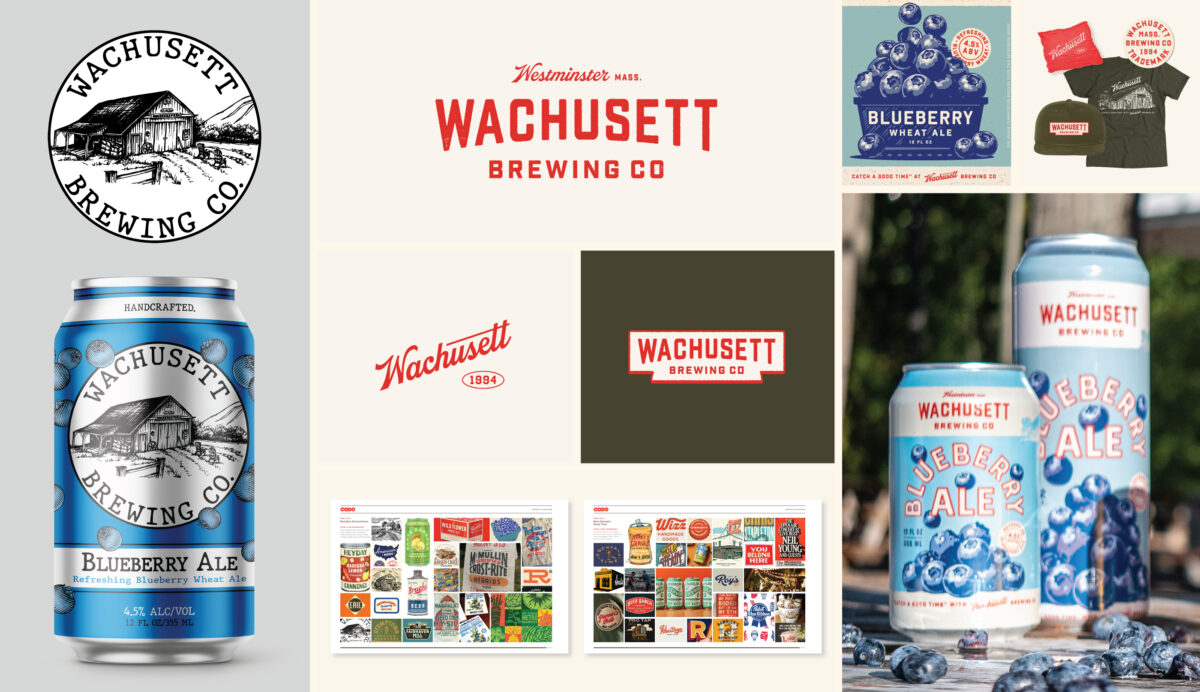
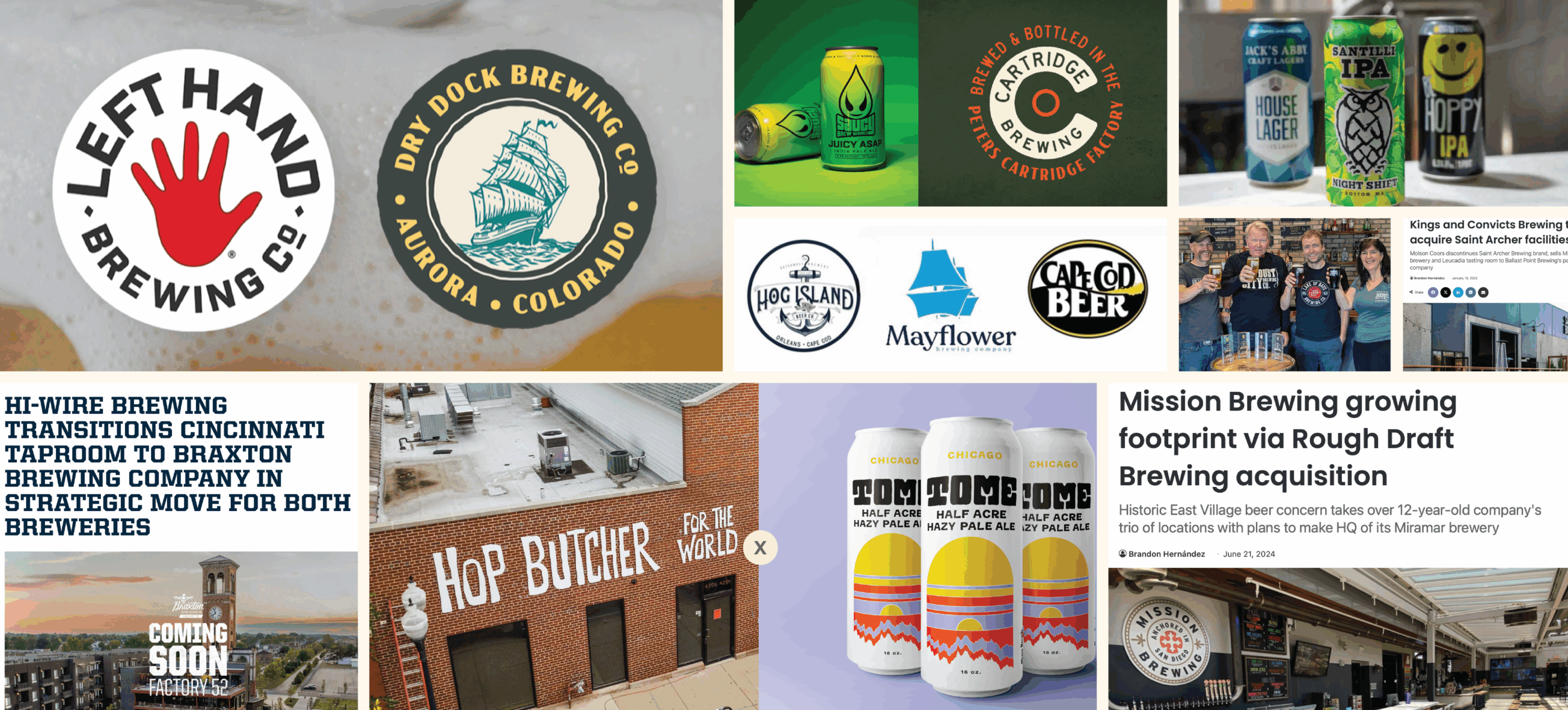
(Below): Wachusett Brewing is a clear example of what happens when a once-dominant brand coasts for too long.

At its peak, the brand produced more than 70,000 barrels. Over time — through multiple ownership changes and a story that failed to evolve — volume slipped to roughly 15,000 barrels.

In 2024, Barrel One Collective acquired Wachusett and partnered with CODO to reset the brand from the ground up — starting with Brand Strategy and a sweeping rebrand. The goal wasn’t to chase trends, but to stabilize the business, refocus the portfolio and rebuild relevance without erasing what made the brand matter in the first place.

One year out from the rebrand, Wachusett Blueberry is up nearly 10% YoY — an early signal that legacy brands can reverse course when they’re willing to level set and do the harder strategic work first.

We’ll be sharing deeper after-action insight on how this legacy brand changed course later this year.


Scaling your story for new markets

This isn’t the primary driver of most rebrands we’re seeing today, but it’s showing up more often as a supporting reason — especially for breweries and beverage brands making careful, targeted moves into new markets.

Crucially, this isn’t the free-for-all expansion we saw in the 2010s. No one’s racing to plant a flag in a dozen states at once. These moves are deliberate. “This neighboring city makes sense because a lot of people live there but commute here for work.” Or, “We’re out in the middle of nowhere, so pushing 45 minutes into the nearest metro is a no-brainer.”

We’re seeing the same mindset across the Fourth Category, too. FMB, RTD and cannabis brands are finding real velocity and looking beyond their home base with the same incremental logic.

Other common catalysts include opening a new taproom, signing with a new wholesaler or making a meaningful push into a new state. Each of these serves as a forcing function to revisit your brand — not just how it looks, but what it stands for.

If you’ve been mostly local to this point, expansion means you can no longer lean on hometown familiarity. Your brand has to carry more weight. It needs to communicate quickly and clearly to people who have no context for who you are.

A smart rebrand here isn’t about making a splash — it’s about making sure your story scales.

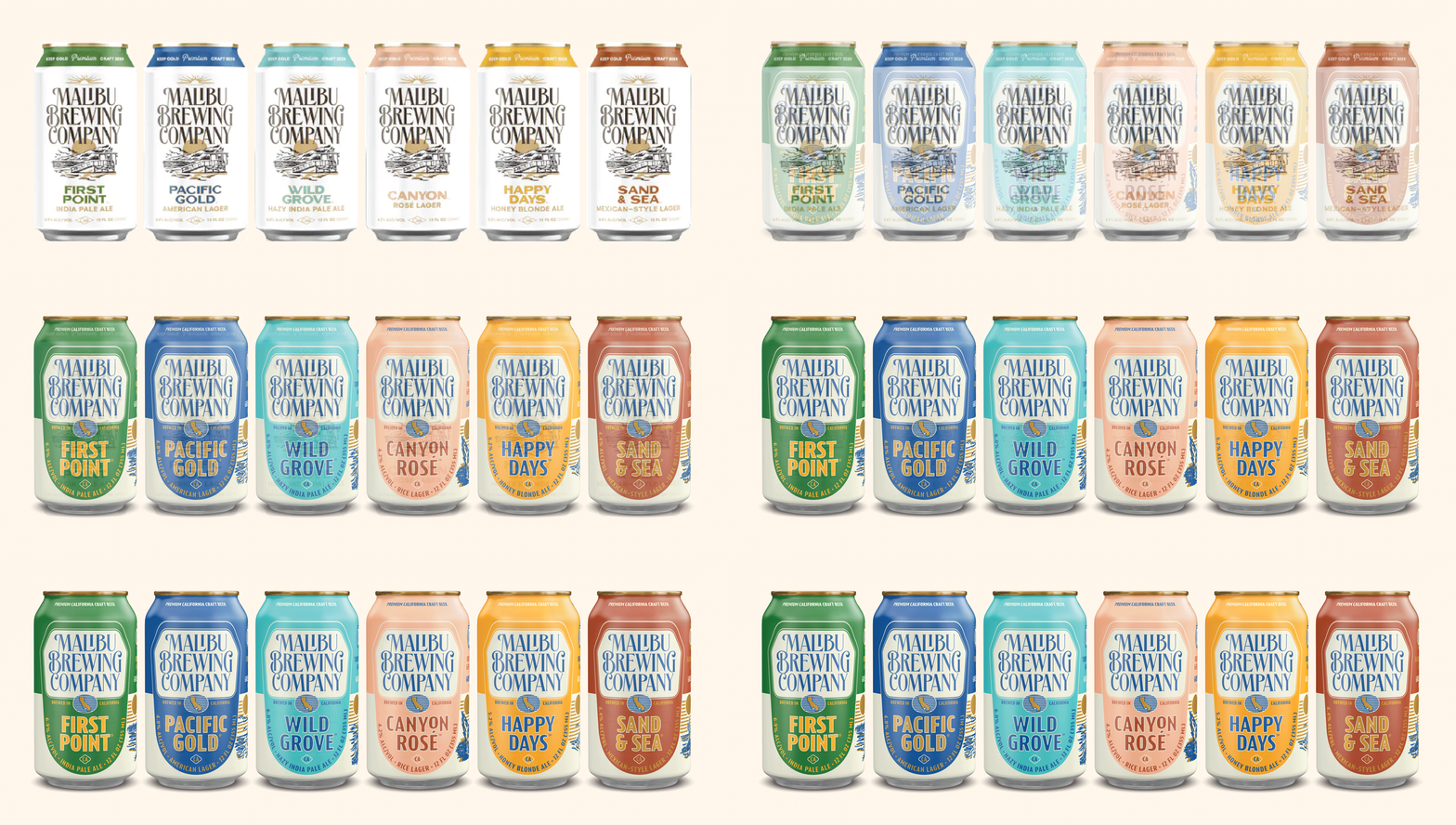
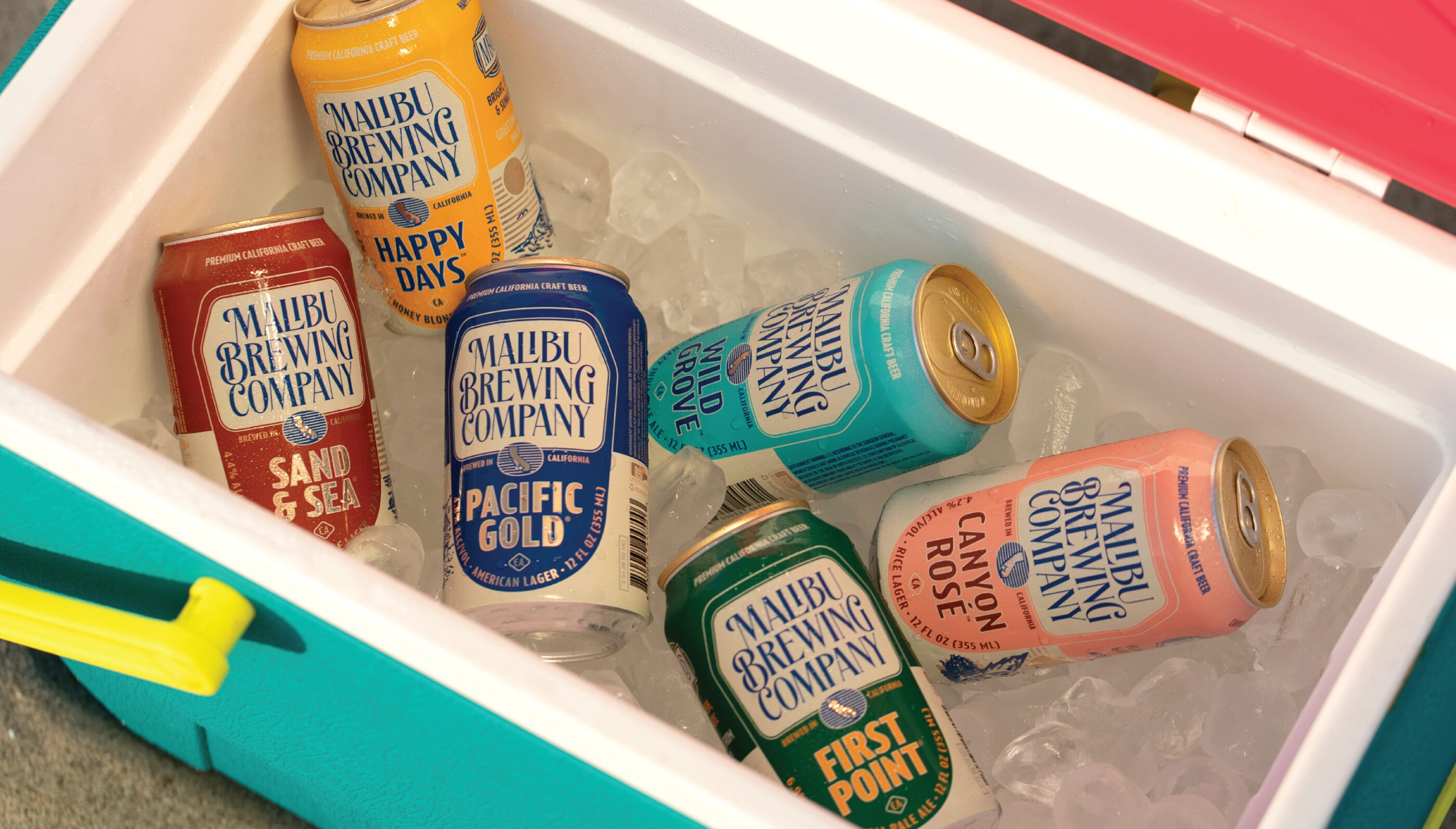
We helped Malibu Brewing work through a Brand Strategy & Architecture process en route to a package refresh. The Malibu team wanted to get all of this upstream work square away ahead of reveal exciting moves, including an acquisition, opening multiple locations and expanding their distribution footprint. Read the case study here + listen to a podcast with founders Ryan and Jill for more background context on this process.

Doubling down on your home market

As competition intensifies and national ambitions get scaled back, more breweries are rebranding to double down on their home markets.

This often means shedding the quirky name or design system that once played well in a crowded taproom but falls flat on a grocery shelf. Or evolving from a hyper-niche vibe into something broader, more welcoming and rooted in regional pride.

Sometimes that shows up in packaging that more clearly signals where you’re from. Sometimes it’s a naming system that reinforces place and identity. Either way, the goal is the same: to become the hometown brand. The default choice. The one that represents your community at the grocery store, the bar or the ballpark.

This shift is both strategic and emotional. As consumer behavior grows more local and fragmented, there’s real power in being of a place — not just from it.

These rebrands aren’t about chasing trends. They’re about staking a long-term claim to your home turf — and giving people a brand they can rally around.

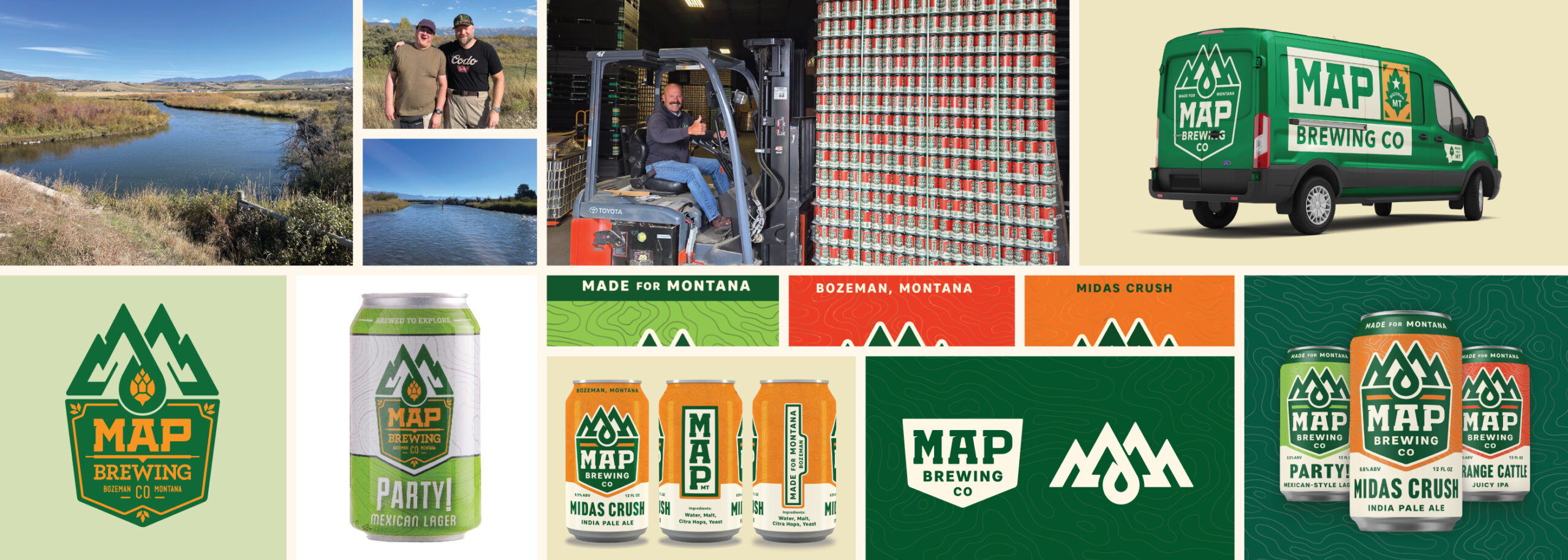
MAP Brewing sits at the edge of Bozeman’s backcountry with a front-row view of the Bridgers. Their rebrand leaned into that sense of place — building a visual identity and packaging system that celebrates Montana’s rugged beauty and positions MAP as Bozeman’s hometown brewery.

Read a deep dive case study on this process here and listen to a podcast with MAP here.

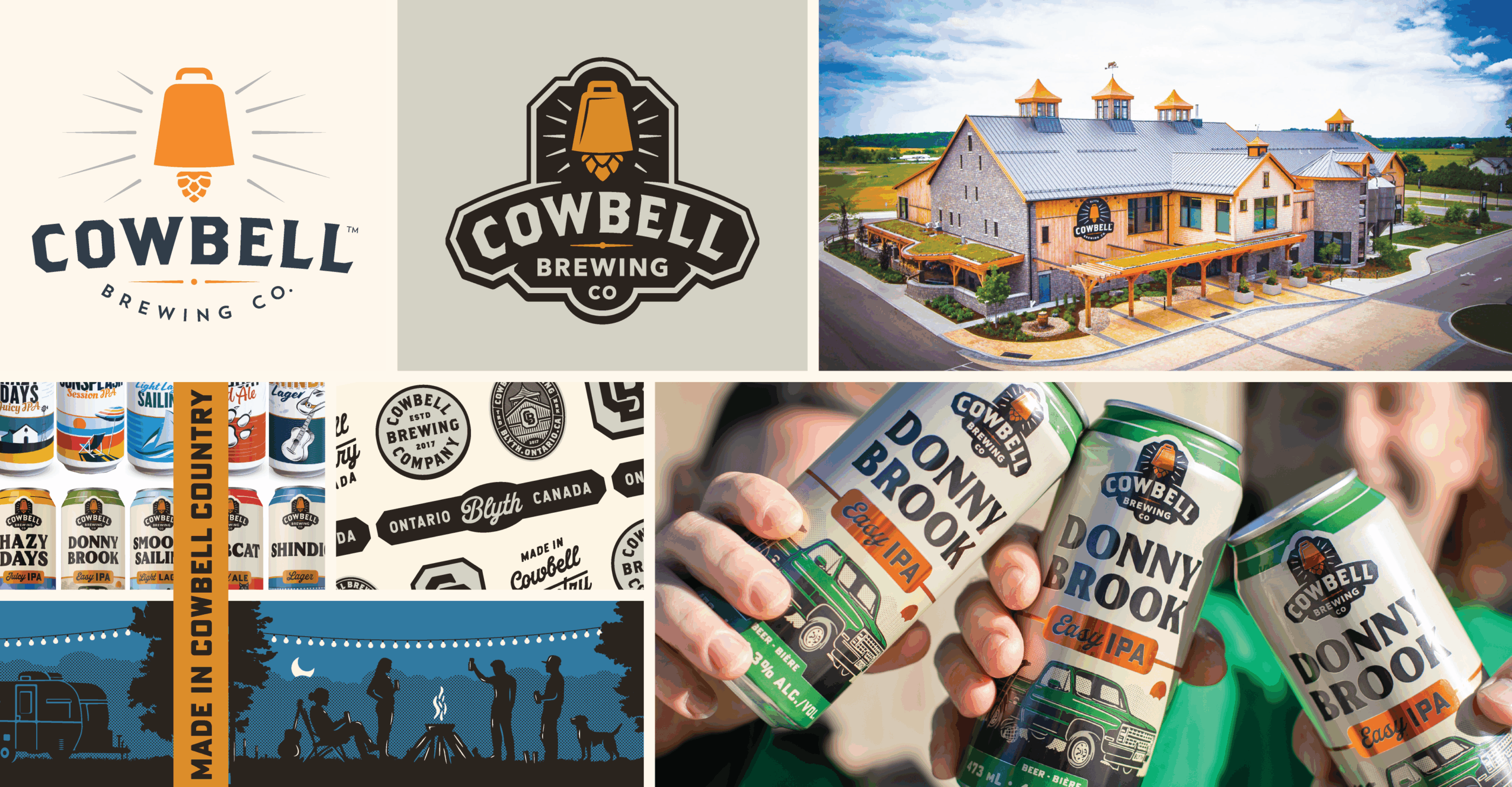
Cowbell Brewing is one of the largest breweries in Ontario — and a strong example of how legacy brands can evolve without losing their center.

We helped define an aspirational idea: Cowbell Country. A day away from it all — and a brand designed to resonate across Ontario, not just inside the taproom.

Read a deep dive case study of this process here and listen to a fun companion podcast with the Cowbell team here.

Rebranding specific brands and/or brand families

Not every rebrand needs to be a full teardown. More often, we’re seeing breweries make targeted, tactical updates to a specific brand family or flagship line — while leaving the core identity and Brand Strategy intact.

These moves are usually packaging-led: freshening up dated design, improving shelf blocking, tightening Brand Architecture or aligning the look and feel with where the brand sits today.

It’s a smaller investment than a full rebrand, but one that can pay outsized dividends — especially if the product in question is driving most of your volume or growth. If your flagship looks dated, or feels inconsistent with the rest of your lineup, it’s probably holding you back. A focused refresh gives you the chance to course-correct without rethinking everything.

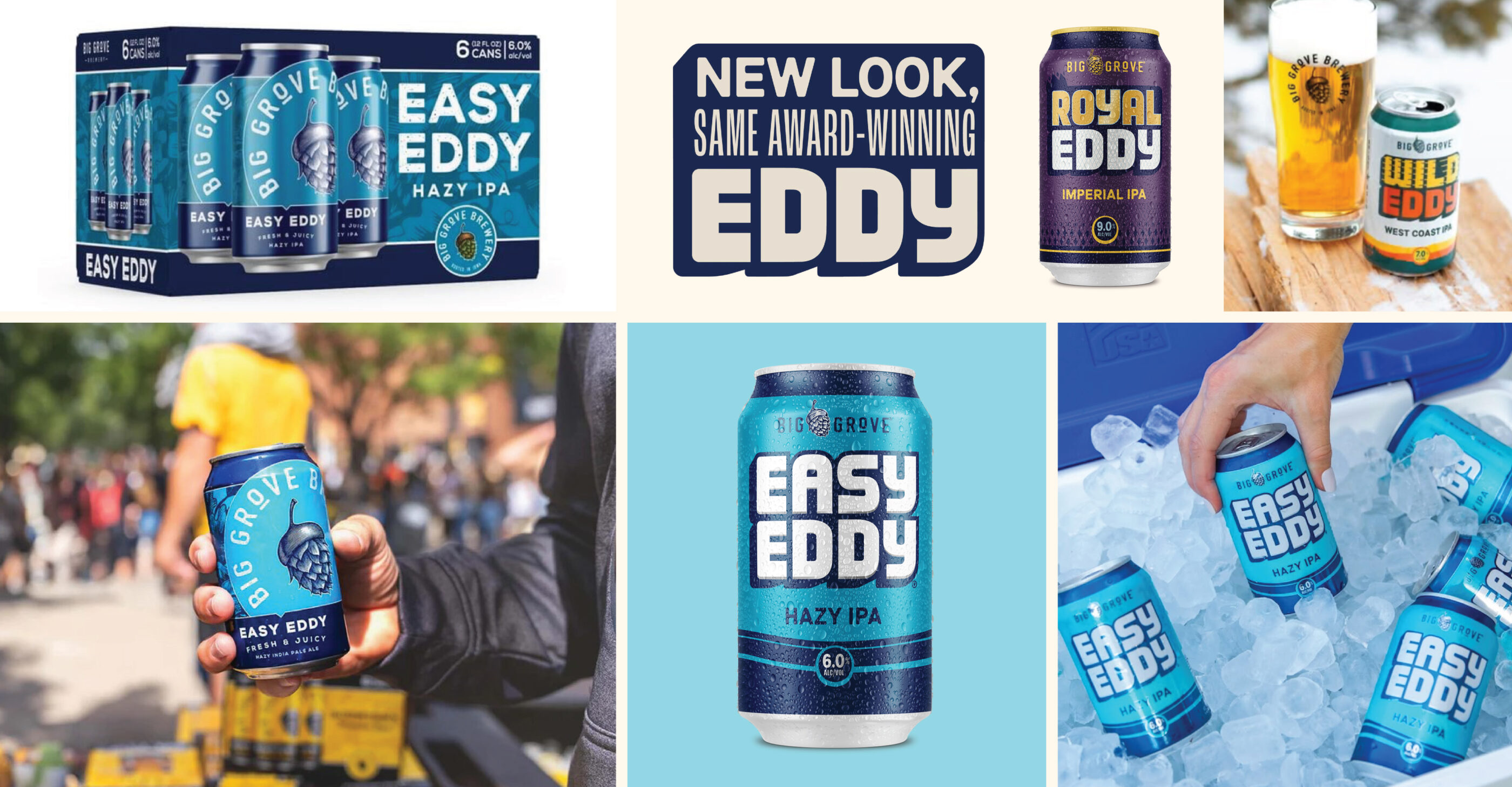
Big Grove recently rebranded its white hot Easy Eddy / Eddy brand family. (Related reading: How to scale the Sub Brand Ladder).

Brand Architecture as a rebrand-driver 

From new acquisitions to Sub Brands breaking out, Brand Architecture has become one of the most common catalysts behind broader brewery rebrands and identity refreshes.

And it’s not just a legacy brewery challenge. We’re seeing it everywhere — from decades-old outfits to businesses barely three years in. Growth often sparks it: a new taproom, an adjacent market, a Sub Brand that suddenly needs room to breathe. Sometimes it’s competitive pressure: your portfolio starts to feel noisy or overlapping, or a rival jumps into your lane.

Whatever the trigger, the result is the same: you have to clarify what your brand stands for, how your products relate to one another and where your brewery goes from here.

Sometimes that means restructuring your portfolio and refreshing your identity in one move. Other times it’s more foundational — redrawing your Brand Architecture map so future growth doesn’t turn into future confusion.

The through line is strategy. These rebrands aren’t about surface polish. They’re about building the structure to scale — clearer roles for each product, a more focused identity and room to grow without cannibalizing yourself.

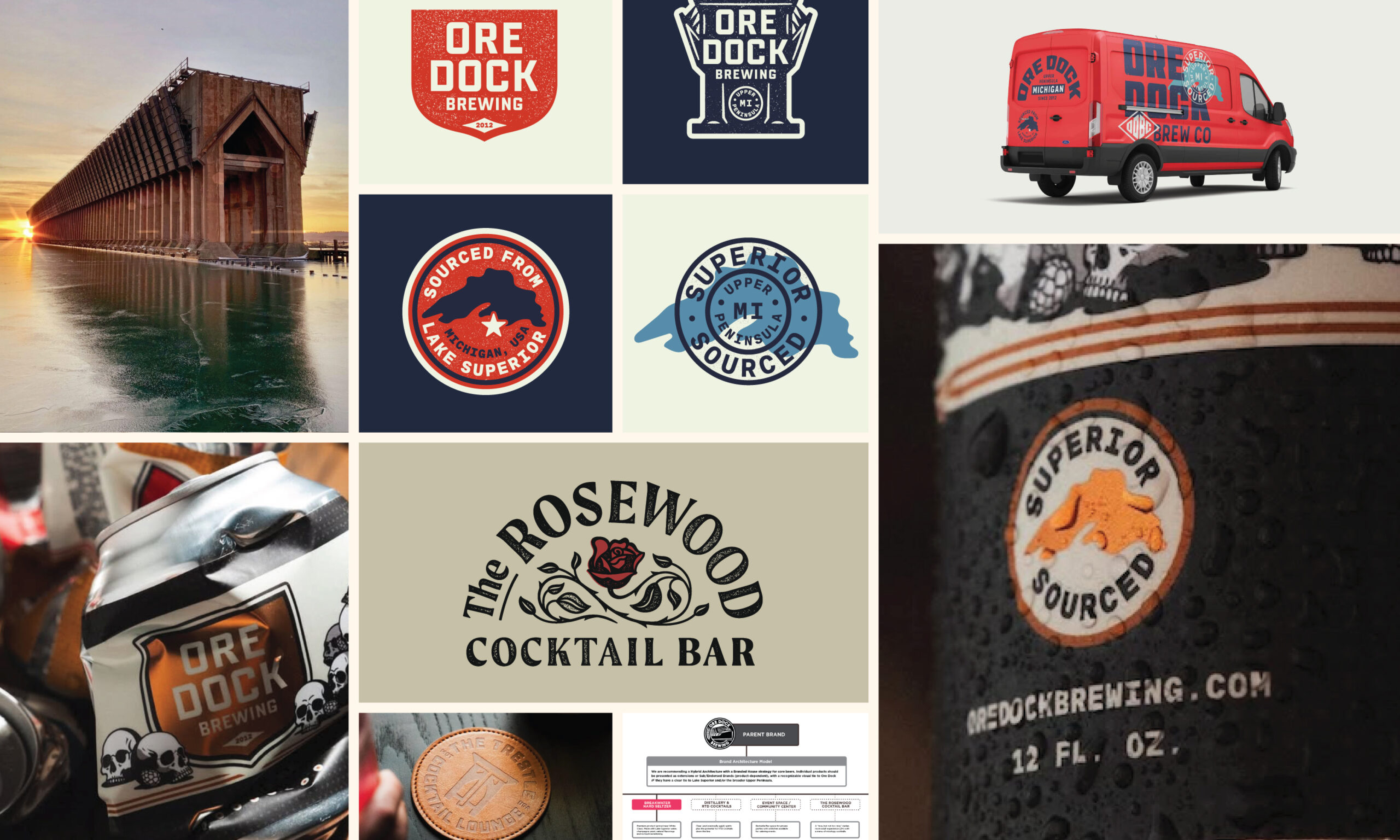
We helped Ore Dock Brewing (Marquette, MI) navigate a Brand Architecture and Strategy process ahead of a major portfolio expansion, spanning beer, distilling & RTDs, cider, NA (sodas) and multiple locations.

Read a deep dive case study on this process here.

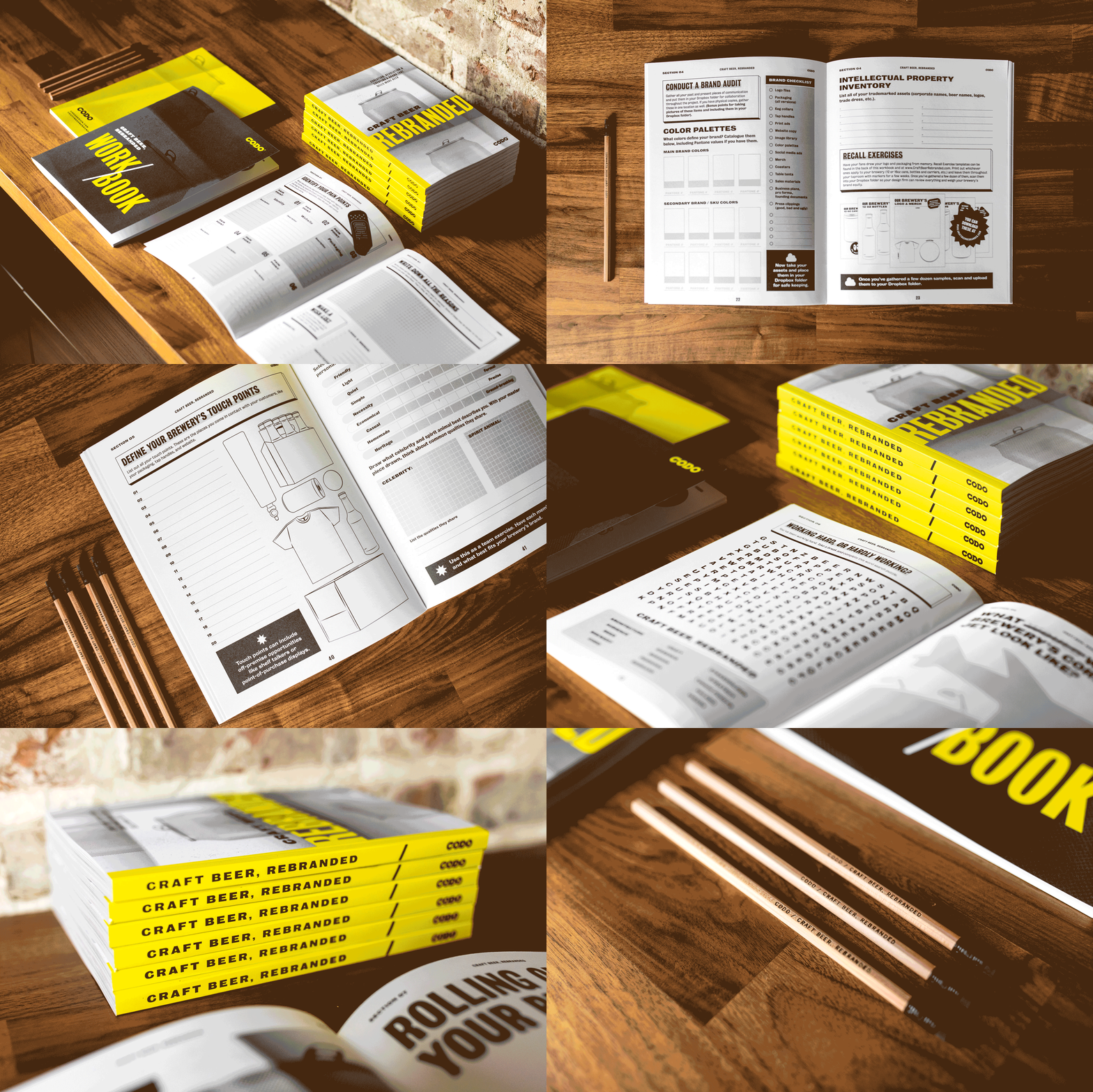
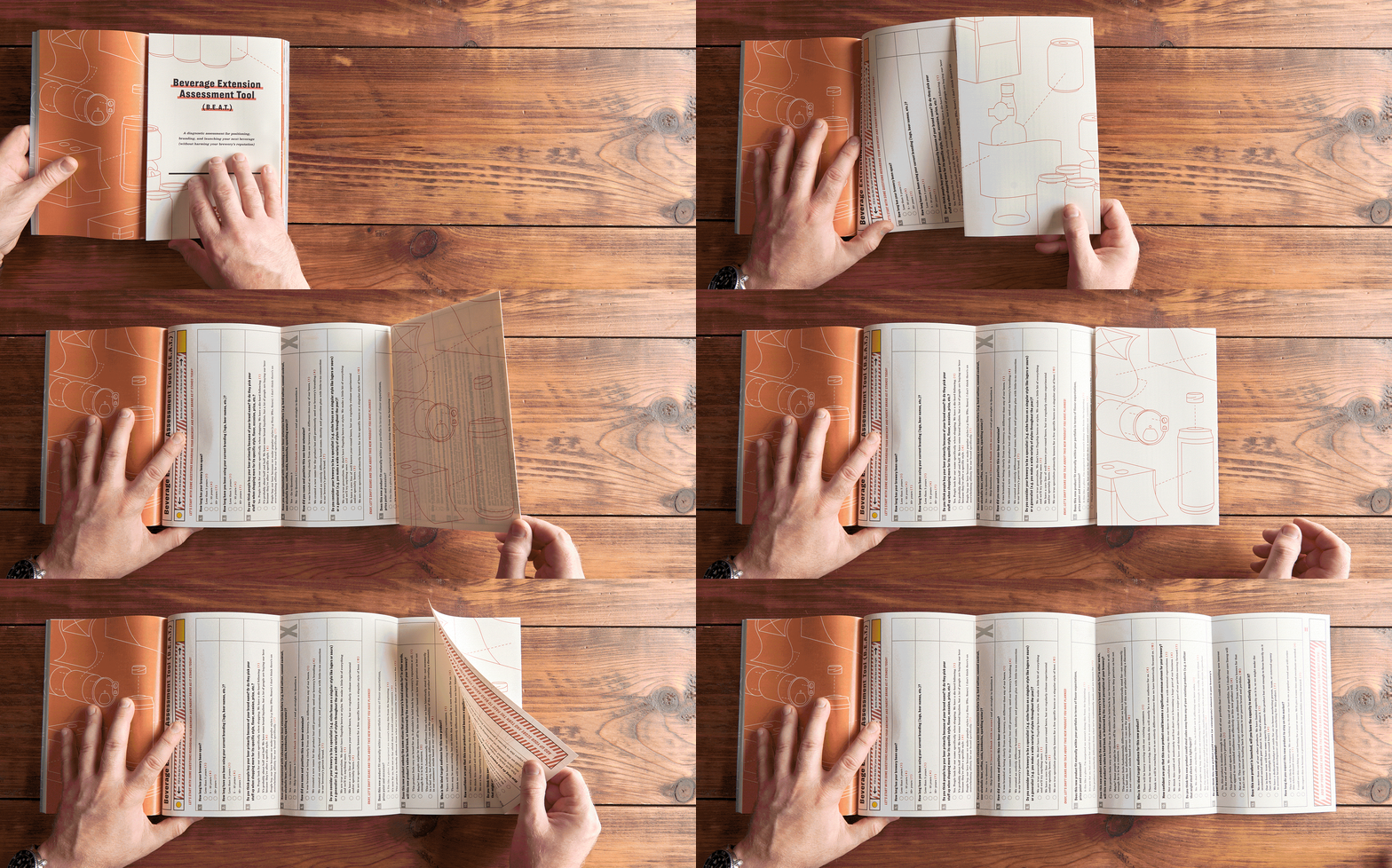
Craft Beer, Rebranded and its companion workbook are a step-by-step guide to help you map out a successful strategy for rebranding your brewery. 

Lifestyle brands & niche plays
Occasion > style

Lifestyle brands aren’t new, but they’re evolving — and more breweries are embracing them as focused, flexible ways to reach specific audiences without being tethered to a particular beer style.

At their core, lifestyle brands connect through shared identity, values or interests — not just product features. They’re about who they’re for and when they’re used, more than what’s inside the can. Story over specs. Emotion over ingredient lists.

We’re seeing more breweries position around occasions and pursuits rather than style or origin. This shows up in naming, packaging and how these products are marketed online — and it almost always answers the same question: When is this supposed to be enjoyed?

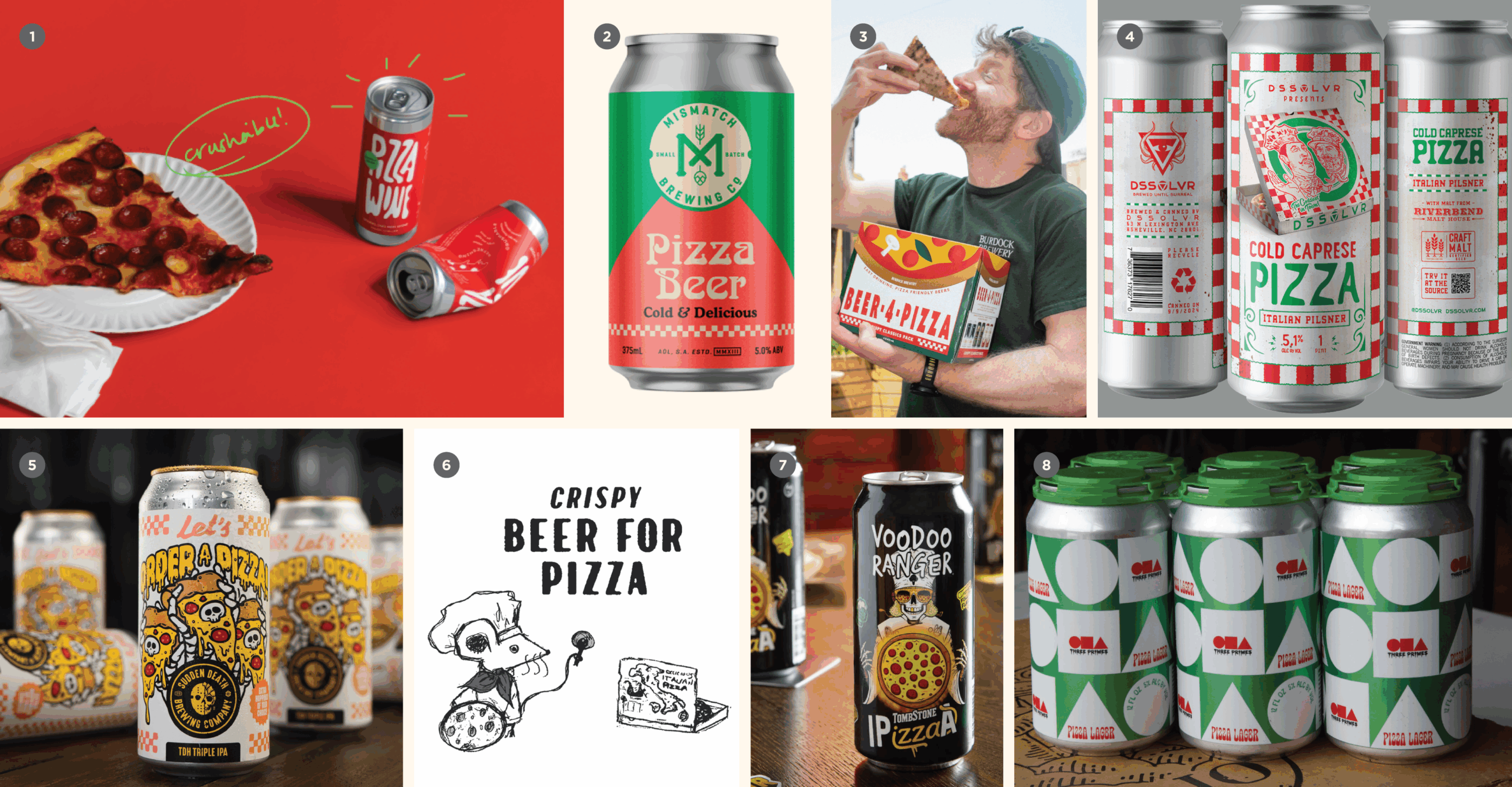
The clearest trend right now is time-and-place branding. You’re not buying a lager — you’re buying a Pizza Beer. A Tailgate Pack. A Sunday Beer. From the jump, these brands bake usage context into their identity.

Below, we’ll highlight a few niches we’ve seen gathering momentum over the past year. This list isn’t exhaustive, but it’s enough to show how wide the door is open here.


Pizza beer & the power of specificity
You’re not selling a lager. You’re selling Friday night.

Pizza Beer might be the purest expression of time-and-place branding. The beer itself is usually just a lager or pilsner. But call it “Pizza Beer” and suddenly it carries meaning — steam rising off a greasy pie, paper plates, friends on the couch, cheap laughs. It’s informal. Communal. Fun.

The magic is in the specificity. “Pizza Beer” tells the drinker exactly what to do with it — when to drink it, how to feel, who to share it with. There’s no style education or ABV posturing. Just a simple idea that makes perfect intuitive sense.

Expect more entrants — and copycats. But also expect the mechanic to spread into other cuisines and occasions: “Taco Beer,” “Takeout Pack,” “Steak Night.” Same playbook, new menu.

1. Pizza Wine, 2. Mismatch Brewing, 3. Burdock Brewing, 4. DSSOLVR Brewing, 5. Sudden Death Brewing, 6. Off Color Brewing, 7. Voodoo Ranger, 8. Three Primes

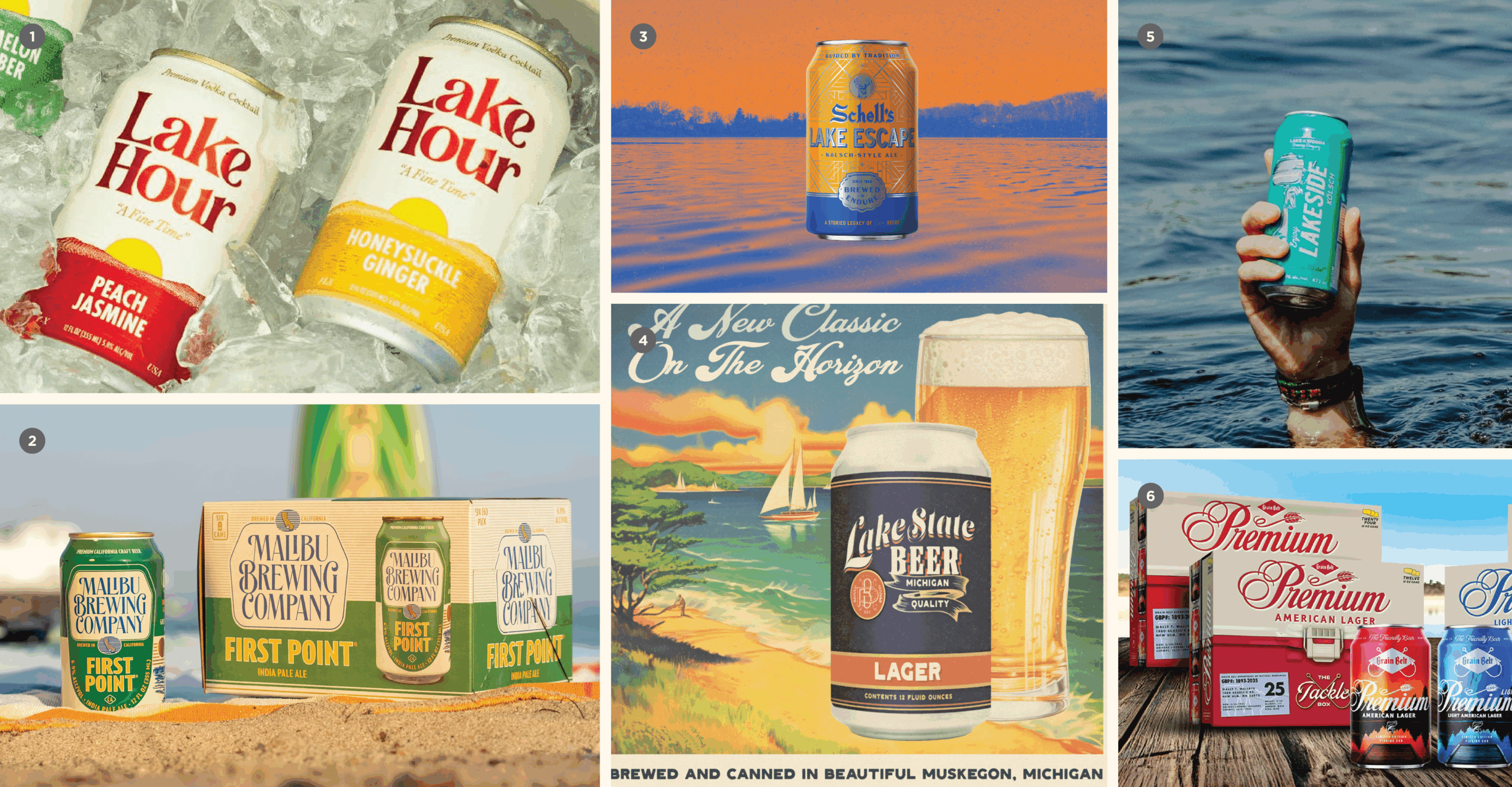
Lake beers, fishing beers & relaxed seasonal ritual
Anchored in place, built for pace

If Pizza Beer owns Friday night, Lake Beer owns all-day Saturday.

This trend sits at the intersection of seasonality, place and lifestyle. It’s less about flavor than vibe. These beers don’t have to shout “summer,” but they almost always lean crisp, light, maybe a little retro — and above all, easy. Easy to drink, easy to share, easy to haul onto a boat.

We’re seeing breweries lean into this in a few ways:

– Launching purpose-built SKUs for lake days, boat trips or summer hangs

– Rebranding an existing core lager with a lake-forward angle

– Designing variety packs with these rituals in mind — Tackle Box, Cooler Times, Cabin Pack, etc.

It’s one of the more flexible plays on the board. It works regionally, seasonally or even as a rotating taproom concept.

1. Lake Hour, 2. Malibu Brewing, 3. Schell’s Brewing, 4. Pigeon Hill, 5. Lake of the Woods, 6. Grain Belt

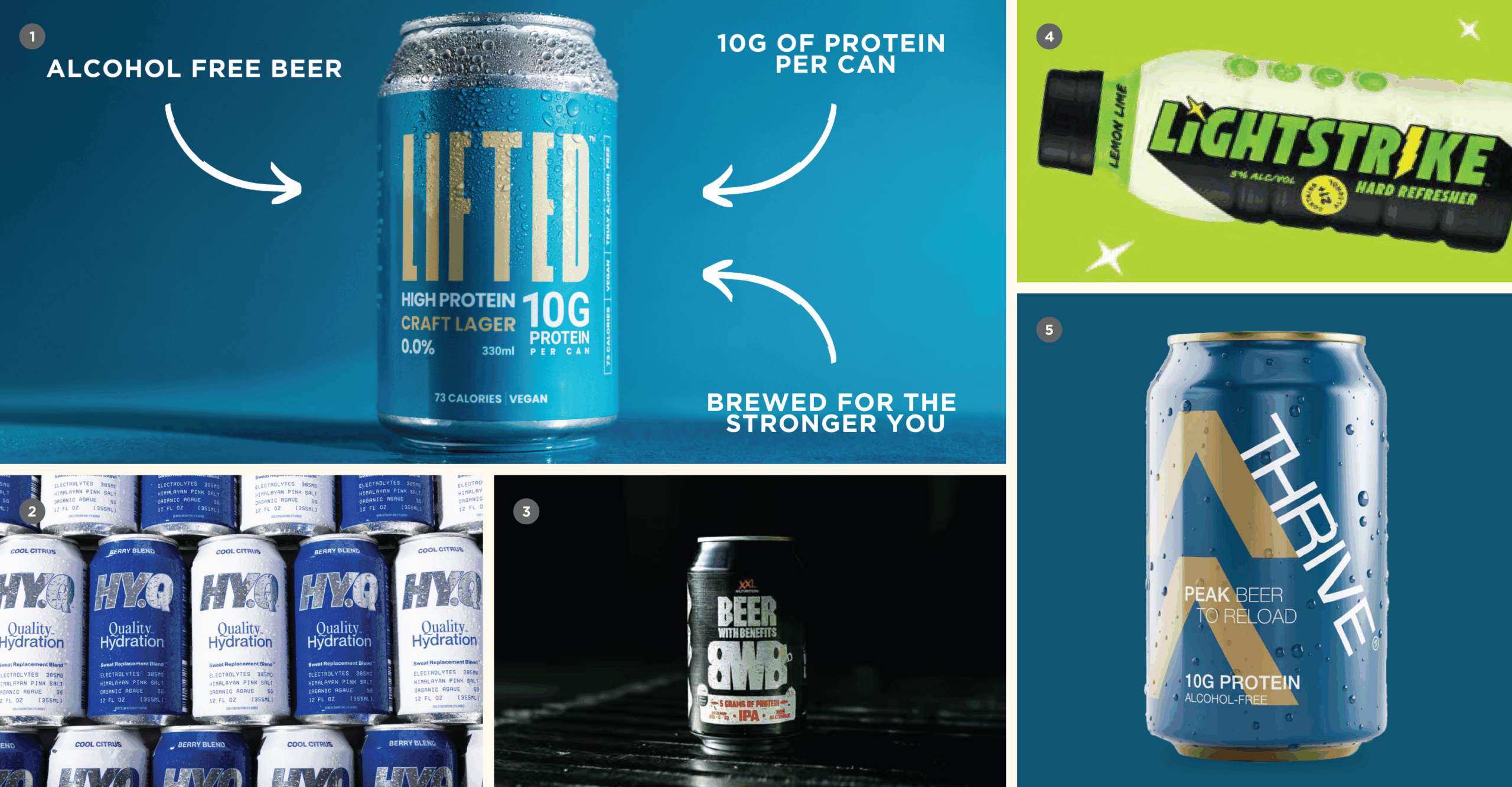
Gym beers, functional beers & the pursuit of balance
A beer well-earned 

This trend has been building slowly, but it’s getting sharper: Beers for people who work out — or want to look like they do.

These brands frame themselves around “earned indulgence” or permissible fun. They borrow heavily from wellness and hydration categories — clean labels, bold type, soft palettes, active language — and sometimes lean on added ingredients like electrolytes or protein to underline the point.

We’ve seen:

– NA beer with protein 

– Light beers framed as post-run or post-ride rewards

– Co-branded releases with fitness communities

– NA craft products rebranded as “recovery beers”

At their best, these don’t read as novelties. They meet modern drinkers where they are: Health-conscious, moderation-minded, but still wanting to have a little fun.

1. Lifted, 2. HY.Q, 3. Beer With Benefits, 4. New Belgium, 5. Thrive Peak

These lifestyle plays work best when you have a clearly defined audience — but if you get it right, the loyalty can be fierce. And the runway here is long. You can spin up new brands around emerging occasions, personas or rituals almost indefinitely. Structurally, they’re flexible too: They can live under your parent brand as a Line Extension, or stand alone as their own entity, depending on your goals and overall Brand Architecture.

Lifestyle branding isn’t just about aesthetics. It’s about meeting people where they are. Most drinkers aren’t obsessing over styles or hop varieties — they’re thinking about how a product fits into their life. And if you can answer that — clearly, confidently and consistently — they’ll keep coming back.

The evolving role of style names in brand positioning
Don’t make people work to understand what you’re selling 


One of the biggest shifts in beer over the last few years is how breweries use style names.

Once a technical — even gatekeeping — term, style names are now becoming something more fluid. In today’s market, we believe they should be used more as a positioning tool. And for breweries willing to loosen their grip on beer geek vernacular, this presents a major opportunity.

Let’s explore what this shift looks like — and how you can use it to your advantage.

The taproom as a resilient anchor
Why physical presence still matters in a fragmented market

In a climate where distributor access is tightening, and resets now more likely to shrink entire categories than expand them, your taproom remains one of your most resilient assets.

– It’s your most direct customer connection.

– It’s a place to test new products and ideas.

– It’s a brand-building engine.

– And increasingly, it’s your most reliable source of revenue.

We’re seeing more breweries shift their mindset — treating the taproom less like a passive outlet and more like a strategic centerpiece. A home base. A place to build community moats and long-term brand affinity, even as the broader market stays unpredictable.

So the question becomes: Why should someone choose your taproom over the dozens of bars, restaurants and breweries closer to home — or even over staying in altogether?

Here’s how that thinking is showing up in practice — through design, programming and operations that make a taproom magnetic, memorable and meaningful.

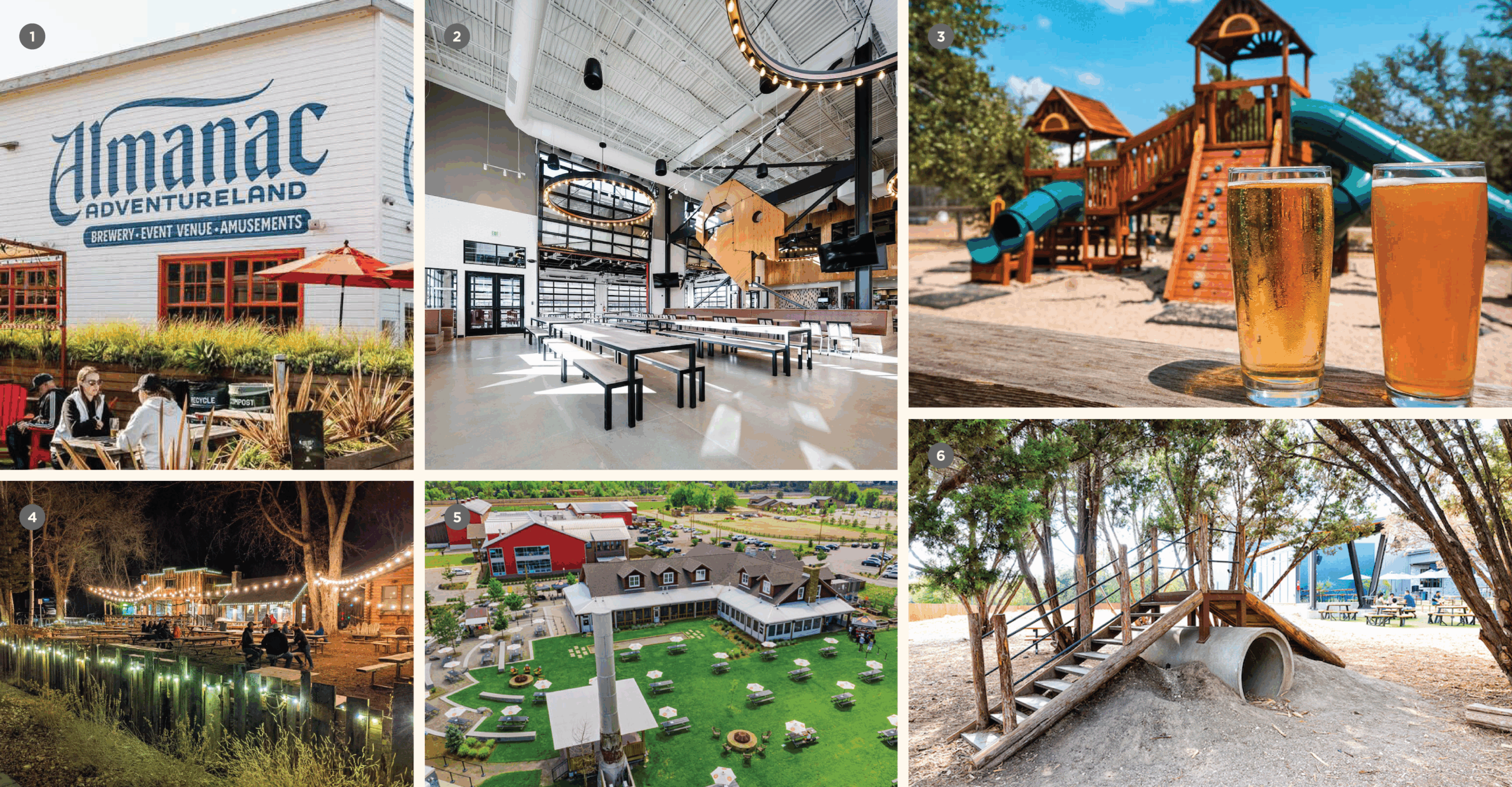
1. Adventureland (Almanac Brewing), 2. Prost Brewing, 3. Family Business Brewing, 4. Stodgy Brewing, 5. Breckenridge Brewing, 6. Meanwhile Brewing

Taproom tactics

You can’t just open your doors and assume people will come. The best taprooms today are active, not passive. They’re built to pull people in — and keep them coming back.

Across the country, we’re seeing breweries rethink how to drive traffic and stretch their presence across more parts of the day and week. A few consistent threads:

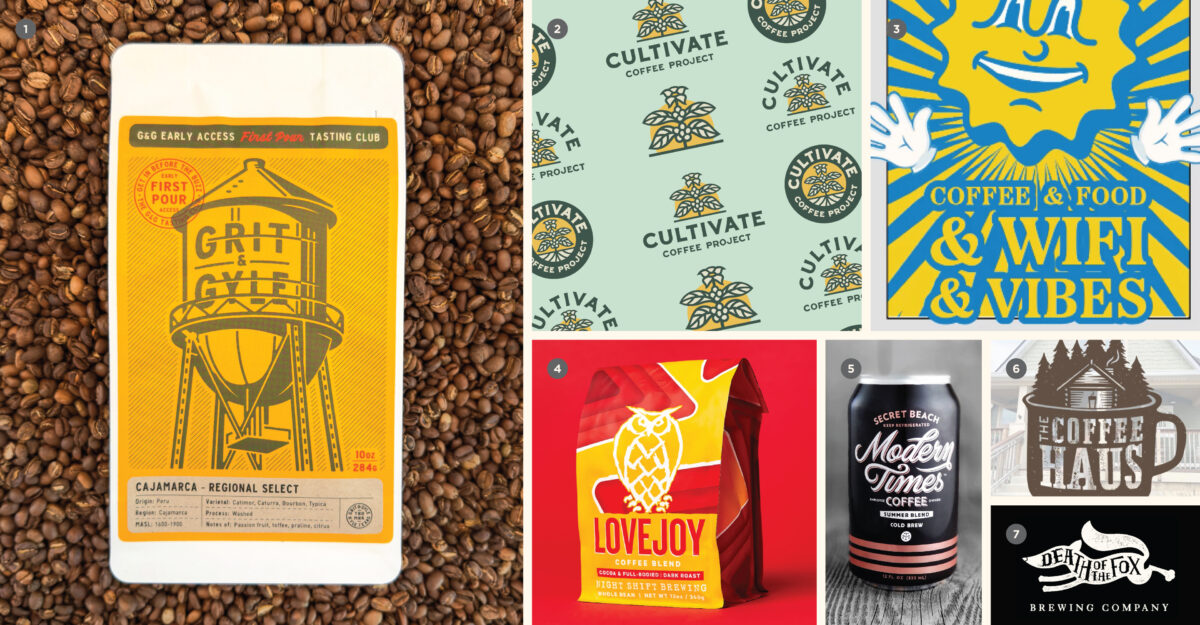
AM to PM programming — Cold brew, slushies, even full-on coffee service is helping breweries open earlier and capture more dayparts. Simple breakfast options or third-party food pop-ups can extend dwell time without requiring a kitchen.

(Example: Death of the Fox used this approach to build an entirely new AM audience.)

Family infrastructurePlayscapes, toy libraries, stroller parking — if you’re going to call yourself family-friendly, back it up with real infrastructure. Make it easier for parents to say yes to a visit.

Events and themed nights — Trivia, (goat) yoga, live music, rotating food trucks, vinyl nights, seasonal markets — yes, everyone does these. But that’s because they work. The trick is consistency and quality. Keep showing up.

Patios matter more than ever — Outdoor space continues to be one of the most valuable taproom upgrades you can make. It doesn’t have to be fancy — it just has to be pleasant and usable more than a few months a year.

Design and atmosphere — Details matter. Comfortable seating, lighting, acoustics, and a cohesive finish can make or break someone’s decision to stay for a second round — or come back next weekend.

You don’t have to check every box. But you do need to give people a reason to leave their couch. Passive taprooms will be the first to go. The ones that feel like part of someone’s weekly rhythm stand a fighting chance.

1. Grit & Gyle Brewing, 2. Fertile Ground Beer Co., 3. Standardized Brewing, 4. Night Shift, 5. Modern Times, 6. Guggman Haus, 7. Death of a Fox

Taproom merch as lifestyle signal

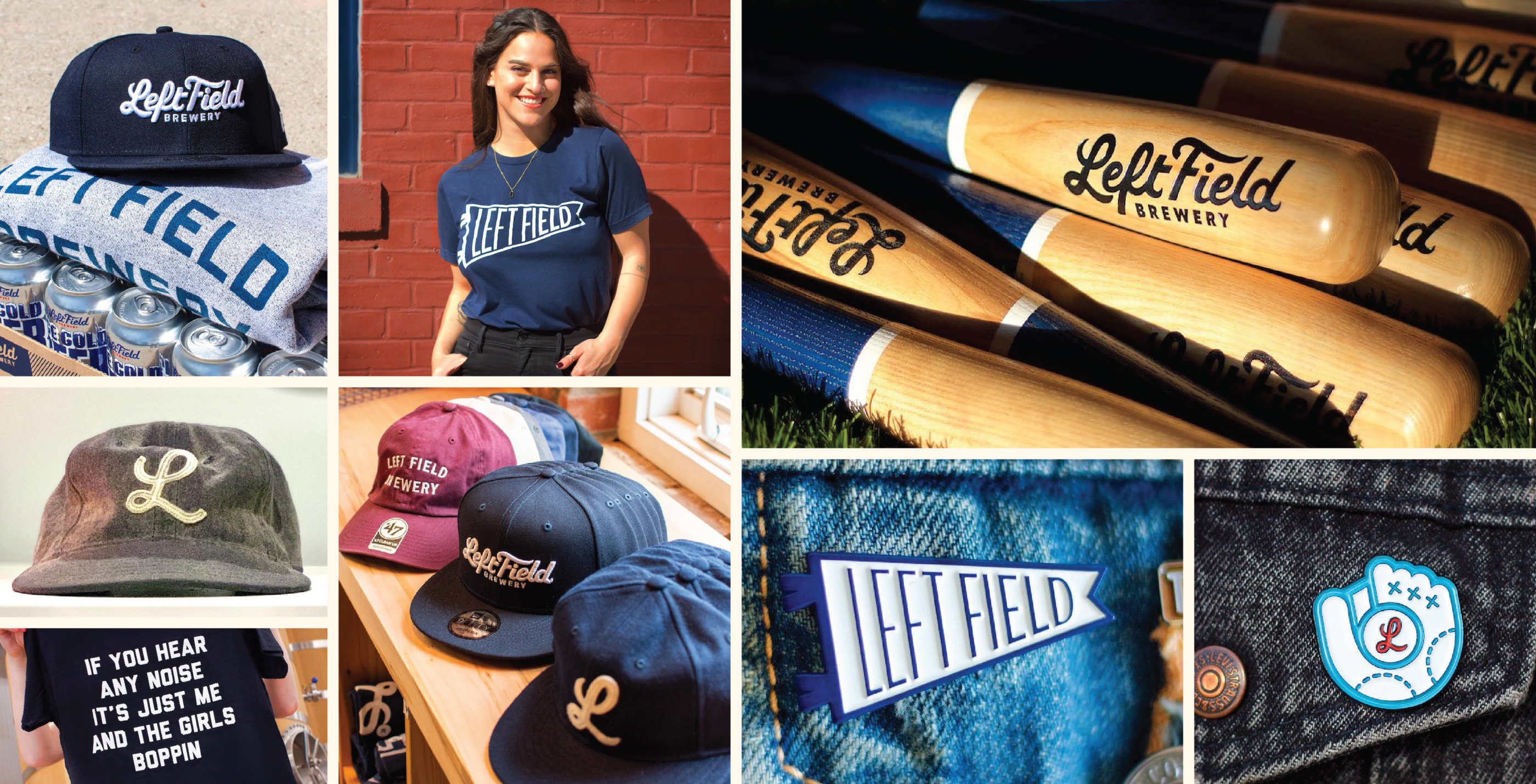
One underused lever here, especially among taproom-focused breweries, is an investment in killer merch.

Beyond being a solid margin driver, merch helps reinforce identity. Done well, it becomes a low-cost billboard that shows up in your customers’ daily lives — tote bags, vintage tees, enamel pins, boat koozies, even custom taproom scents. (Yes, really.)

We’re seeing breweries branch into new categories that feel natural to their audience: outdoor gear, wellness kits, kitchenware, branded barware. If your brand is built around a lifestyle, your merch should be too.

Left Field is Toronto’s baseball brewery. That sells their outfit short a bit, but this is what they’re known for. And their merch program reinforces this positioning and story with every single piece. I can’t think of a single piece of merch they’ve ever put out that I wouldn’t want to wear. Read more about CODO’s philosophy on merch here.

Targeted Innovation
Focus, then flex 

One of the trickiest conversations we’re having with breweries right now is around innovation. There’s a growing recognition that most portfolios are too bloated — too many SKUs, too little pull-through, and too much internal confusion. So we’re seeing a wave of SKU rationalization: Clearer priorities, cleaner portfolios, and a real focus on what’s working.

At the same time, there’s still pressure to innovate. Consumers expect something new. Your staff still wants to have fun and push boundaries. And in many cases, innovation is how you stay visible.

Crucially, this all has to align with what your distributor actually wants to sell. You can’t force a new package into the world if no one’s going to carry it.

So what’s the right answer?

It depends entirely on your goals, market and distribution strategy. But generally speaking, we’re encouraging breweries to focus their portfolio — and then layer in one or two targeted bets each year.

In the taproom, you can still rotate constantly. That’s where novelty thrives. But in package — where shelf space is tight — we’re seeing much more measured, strategic moves. Often across categories entirely.

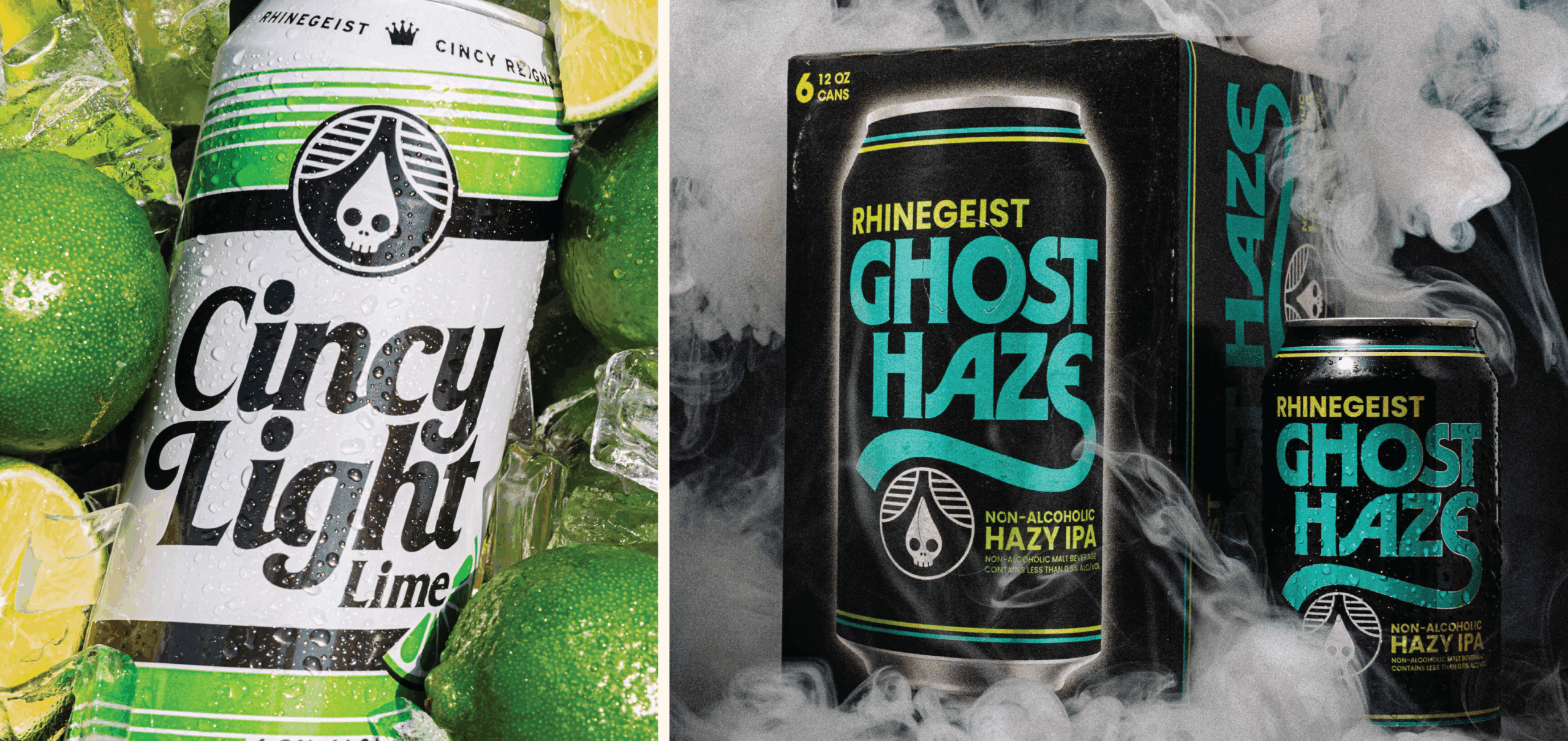
Rhinegeist is a great example of a brewery with a laser focused innovation pipeline. This last year saw only a handful of big plays: A Lime Line Extension of their popular Cincy Light Sub Brand and a new NA line.

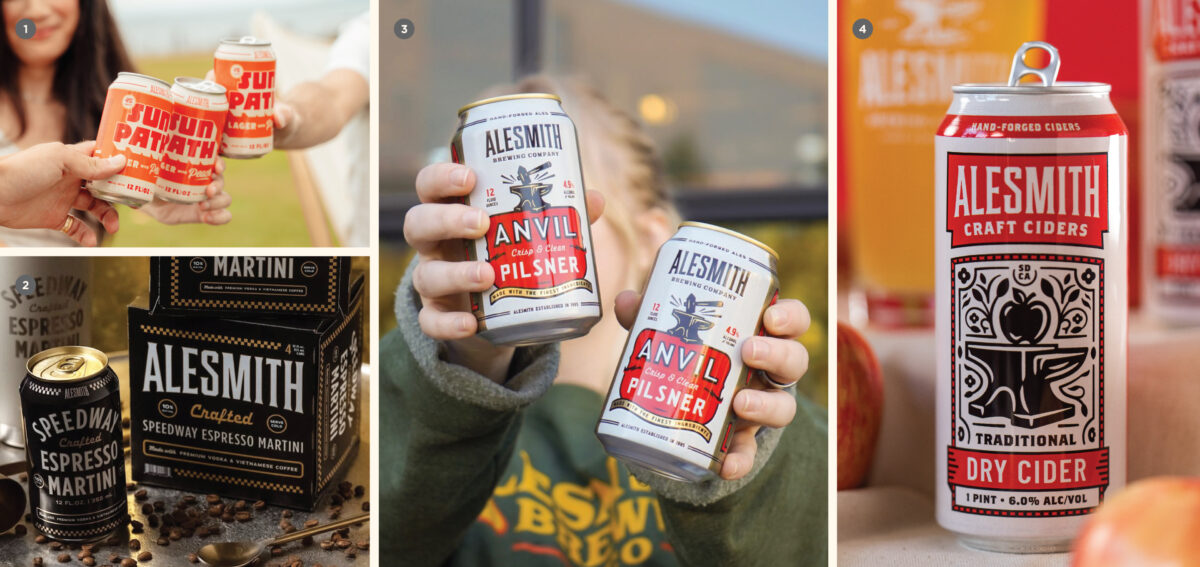
A great example of this approach is AleSmith. Over the last few years, we’ve worked with them to launch a handful of intentional new products:

A hard cider Brand Extension

A flagship Pilsner (Anvil)

A flavored beer line (Sun Path)

An Espresso Martini RTD

A spiked hop water

Each of these cross-category moves serves a distinct audience and occasion  and each one ladders back to AleSmith’s broader brand. No throwaway seasonals. No scattershot variety packs. Just smart, deliberate moves into new territory.

The takeaway here is simple: Innovation doesn’t mean more. It means better. Trim the dead weight, understand what your distributor and consumers actually want, and make your next move count.

A handful of fun projects we’ve worked on with AleSmith over the last 18 months. Read more about how we helped launch their cider brand here

The case for — and against — hyper-provenance
Where hometown pride can help, or hurt, your brand 


Should you double down on our local identity? Or build something that can travel?

This is a question we’re hearing more often — especially from breweries at a crossroads. Some want to own their home region. Others are trying to develop brands that can move more freely across markets, audiences and channels.

These decisions usually start with a conversation around provenance and “localness.”

So: How much should your brand lean into place? And what happens if that place starts to box you in?

Let’s explore the pros and cons of hyper-local branding — and when it can make sense to build something grounded in place.

Section 2: Brand Architecture 


Brand Architecture is the framework that defines how all your brands — current and future — relate to one another. How are they named and positioned? How do they differ? Can they stretch into new categories or price points? And how does it all add up to support your business goals?

Every brewery in the country needs to be thinking about this right now.

We’re seeing Brand Architecture challenges surface in almost every project we touch — and odds are, you’re facing one too. Maybe you’re:

– Debating whether a best-selling beer should spin off into its own brand

– Weighing a Line Extension into a new style or category

– Acquiring another brewery and wondering how (or if) it fits under your parent brand

– Planning a new product launch but unsure whether your core brand has the credibility to carry it

Brand Architecture isn’t a theoretical exercise — it’s a mission-critical tool for navigating growth, risk and long-term flexibility.

Here’s what we’re seeing in this space right now.

Part book, part quiz, and part choose-your-own-adventure-style novel, The Beyond Beer Handbook is a purpose-built tool for helping you expand your brewery’s portfolio and build a more resilient business. Join the nearly 500 breweries and Bev Alc companies that have bought a copy to sharpen their strategy and scale smarter.

The rise — and risk — of light flagship extensions
Why more breweries are launching lighter versions of their flagships — and what you risk if you get it wrong


We’re seeing an uptick in light flagship line extensions this year, both in our project work and out in the wild. This has been bubbling for a few years, but it’s now showing up regularly.

And while this can be a smart, on-trend move, it’s not without risk.

Let’s explore what your brewery should consider if this is on your radar for 2026.


What Exactly Are We Talking About?

Let’s lay out a few definitions real quick, 

A Line Extension is when you introduce a new product within the same category under an existing brand name.

A Brand Extension is anytime you launch a new product in a different category, still under the same brand.

The trend we’re covering today is a Line Extension — specifically, releasing a lighter version of a popular flagship beer. That could mean lower calories, carbs, or alcohol (including non-alcoholic), or all of the above.

But the important piece is that it maintains visual, verbal and emotional ties to the original beer brand itself.

The hidden risk of launching an NA brand 
Avoid this common pitfall when expanding into non-alc


More breweries, distilleries and beverage companies are adding NA products to their lineups. On paper, this makes sense: New audiences, more occasions, a broader brand footprint.

But if your brand also sells alcoholic beverages, the way you position your NA offering matters. 

Get it wrong and you risk undermining the very products that built your reputation.

Let’s explore how to thread this needle today.

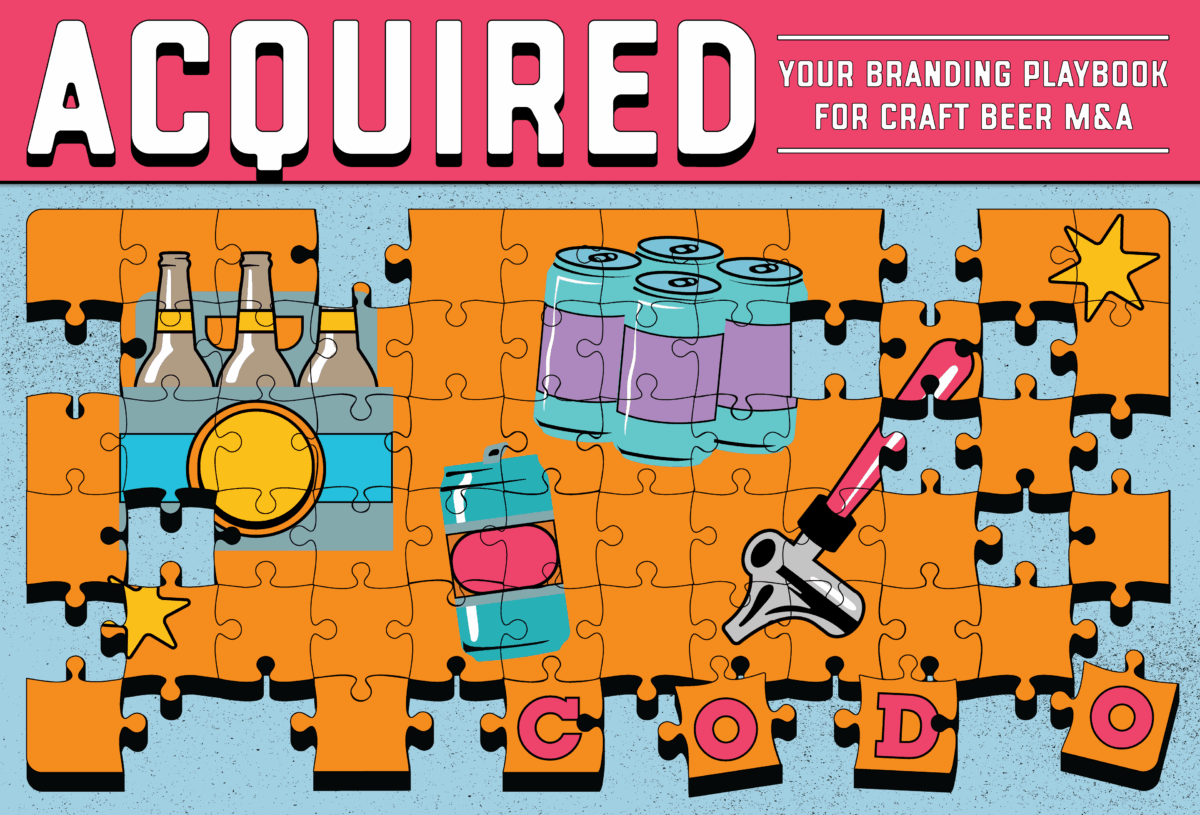
Acquired: Brand strategy lessons from a wave of craft beer M&A
Your Branding Playbook for Craft Beer M&A


This was part of our 2025 Beer Branding Trends summer series — a multi-part deep dive exploring what happens to a brewery’s brand when it gets acquired. Some survive. Some disappear. Some come back even stronger.

And all of them leave behind a trail of brand strategy lessons worth studying.

If you’d like early access to insights like this — before your competitors see them — sign up for the BBT newsletter here.


Mergers, acquisitions, joint ventures and rollups are reshaping the beer industry — and with them come serious brand questions. What happens to the company you just bought? What happens to the company doing the buying? And what happens to your brand in the mind of your customer?

We’ve worked with more than a dozen breweries who have either been acquired or were doing the acquiring. Some were household names. Others were small regional plays. And the brand challenges are almost always the same.

Here’s what we’ve learned.


Why M&A is accelerating right now

The US is home to more than 9,000 breweries, many of which are vying for the same shelf space, tap handles and distributor attention. Some larger breweries are choosing to buy regional competitors rather than fight them.

A large segment of the industry is aging out. Thousands of founders are nearing retirement. Many are selling to employees, partners or outside firms rather than shut down entirely.

Acquisitions can also be strategic. If your brewery is a production workhorse but lacks a strong hospitality presence (or vice versa), an acquisition can round out your capabilities.

The smartest buyers aren’t just acquiring brewing equipment. They’re acquiring IP. They’re acquiring a story, a loyal customer base, vendor and retail relationships, and years of hard-earned goodwill.

All of that is valuable. But you can’t keep it unless you steward the brand carefully. If you mess up the transition — and most breweries do — you risk losing the very equity you just paid for.

What you’re actually buying

When you acquire a brewery, you’re buying its brand as much as its beer. And the value of that brand depends entirely on the perception of the people who buy it. So don’t treat the post-acquisition brand decisions as a formality.

You need to evaluate — and preserve — what’s working before you change anything.

This includes:

The brand’s visual and verbal identity

Its flagship products and positioning

Its pricing and packaging strategy

Its market reputation and customer relationships

All of this comes down to Brand Equity. What has this brand built over the years that’s still meaningful and distinct? What’s sacred? What’s malleable? And what’s worth overhauling?


Common post-acquisition challenges

1. Brand Architecture: Will this brand continue to live on? Will it be absorbed into the parent company? Or will it become a Sub Brand or Endorsed play?

2. Portfolio overlap: What happens when two brands each have a Hazy IPA, a Pilsner and a Mexican Lager? How do you prioritize and position them within a unified portfolio?

3. Taproom integration: Do you rebrand physical locations? Leave them as-is? Shut one down? Open more?

4. Digital strategy: Should you merge websites and social handles? Or keep things separate?

5. IP cleanup: Does the acquired company actually own all its trademarks? What protections need to be filed?

There’s no one right answer to any of these questions. But a thoughtful Brand Architecture framework can help you make each decision with clarity.

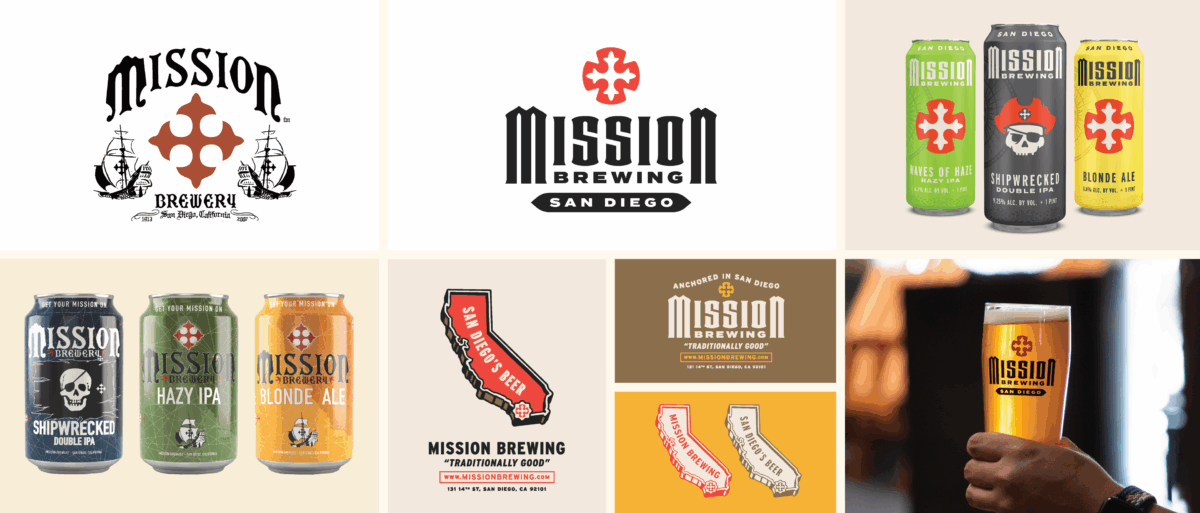
We rebranded Mission Brewing after an acquisition several years ago and they’ve been growing ever since. Read a deep dive case study on that process here

When (and how) to rebrand an acquired business

The best advice here is simple: Don’t rebrand a company just because you can.

Too many acquiring breweries rush to put their stamp on a deal — new name, new look, new vibe. And in doing so, they throw away the very thing that made the acquisition worthwhile.

Instead, start by evaluating what was working. What made this brand successful in the first place? What do its customers love? And how can you preserve that equity while still steering the company toward a new phase of growth?

If a rebrand makes sense, go slow. Bring people along. And make sure you’re doing it for strategic reasons — not ego.


Do you need a hospitality group or HoldCo brand?

Once you own multiple breweries, Brand Architecture gets a lot more complex. That’s where a hospitality group or HoldCo brand can help.

Hospitality groups are typically consumer-facing. They house a portfolio of taprooms, brands, and shared amenities. This makes it easier to build loyalty programs, employee pipelines, charitable giving, and joint marketing efforts.

HoldCos are more backend focused. They may not be public at all. But they help structure ownership, trademarks, and shared services.

If you’re actively acquiring new brands — or plan to — you’ll need one or both of these models in place. Otherwise, your Brand Architecture will eventually start to collapse under its own weight.

Real-world scenarios to consider

– What happens to limited-release taproom beers that have a cult following?

– How do you merge specialist brands with generalist ones? (E.g. a lager brewery acquired by a hop-forward flagship)

– Can you reposition acquired SKUs while phasing out the parent brand?

– How do you manage customer perception and digital footprint through the transition?

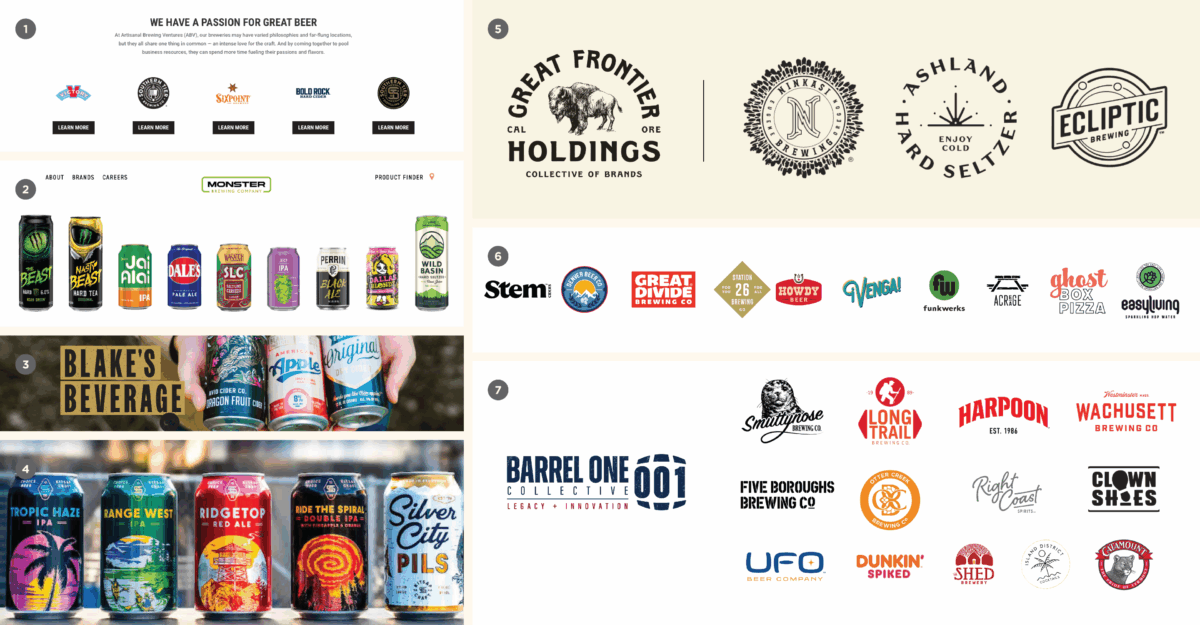
1. Artisanal Brewing Ventures, 2. Monster Brewing, 3. Blake’s Beverage Co., 4. Ackley Brands, 5. Great Frontier Holdings, 6. Wilding Brands, 7. Barrel One Collective

Final thoughts

Mergers, acquisitions, joint ventures and rollups are reshaping the beer industry — and each comes with complex brand questions that can’t be treated as afterthoughts.

Yes, deals are driven by hard assets — tanks, facilities, taprooms, SKUs. But the real value often lies in something less tangible: Brand Equity. The story, the trust, the reputation that a company has built over time. That’s what customers are buying into. That’s what distributors want. And that’s what you risk losing if you don’t handle the transition with care.

Whether you’re the acquirer or the acquired, your first job is to understand what made this brand work. What’s sacred? What’s still relevant? What should evolve — and what should stay rooted?

This work happens before the deal closes. It continues long after. And it shapes everything from your Brand Architecture and portfolio decisions to your retail presence, taproom footprint, team morale and customer retention.

Handled well, M&A can accelerate growth, strengthen your brand and build something greater than the sum of its parts.

Handled carelessly, it can quietly erode everything that made the deal worthwhile in the first place.

So take your time. Lead with empathy. And remember: You’re not just acquiring a business. You’re inheriting a story. Don’t lose it in the process.


Further reading: 

Acquired Issue 1: M&A Mania: Why Craft Beer Acquisitions Are Everywhere Right Now 

Acquired Issue 2: So You Bought a Brewery. Now What?

Acquired Issue 3: Working Through Real Branding Challenges from the Front Lines of Brewery M&A

Section 3: Beer & Beyond (Beverage Trends)


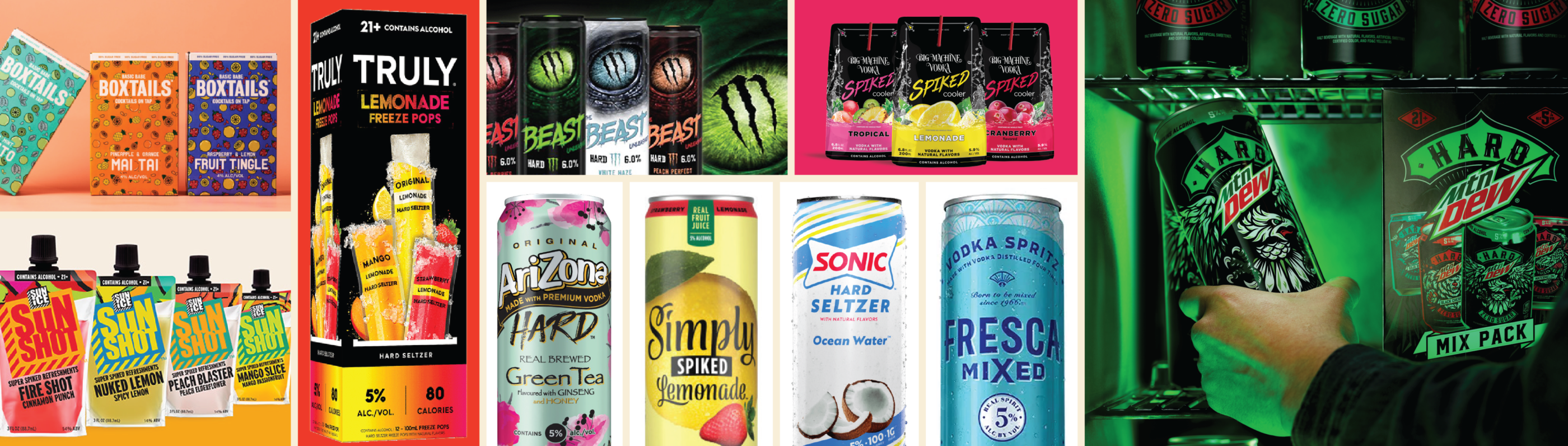
Today’s drinkers aren’t staying in one lane. It’s not just craft beer in the fridge — it’s hard tea, canned cocktails, seltzers, domestic lagers, craft lagers, canna-beverages, hop waters and NA everything.

This fluid behavior is driving an ongoing convergence across categories — soft-to-hard crossovers, Big Soda moving into beer, cannabis brands wading into Bev Alc and craft breweries exploring entirely new formats, segments and occasions.

You could view this as frustrating — why aren’t people loyal to beer anymore? But a better framing is to see it as an opportunity. Drinkers want variety. So what can you make to meet that demand, and keep them coming back no matter what they’re in the mood for?

This section explores just that — the beer and Beyond Beer trends shaping today’s landscape, and how you might apply them to your portfolio.


Flavor-forward: The power of familiarity
Why clarity (and comfort) are driving beer’s next wave

Note: This idea pairs well with one of this year’s BBT exclusives — Style names as positioning tools. Both highlight the same larger shift: clarity, simplicity and meeting customers where they are. (Join the Beer Branding Trends Newsletter to read the full exclusive.)

Not every drinker wants to decode your product. In fact, most don’t.

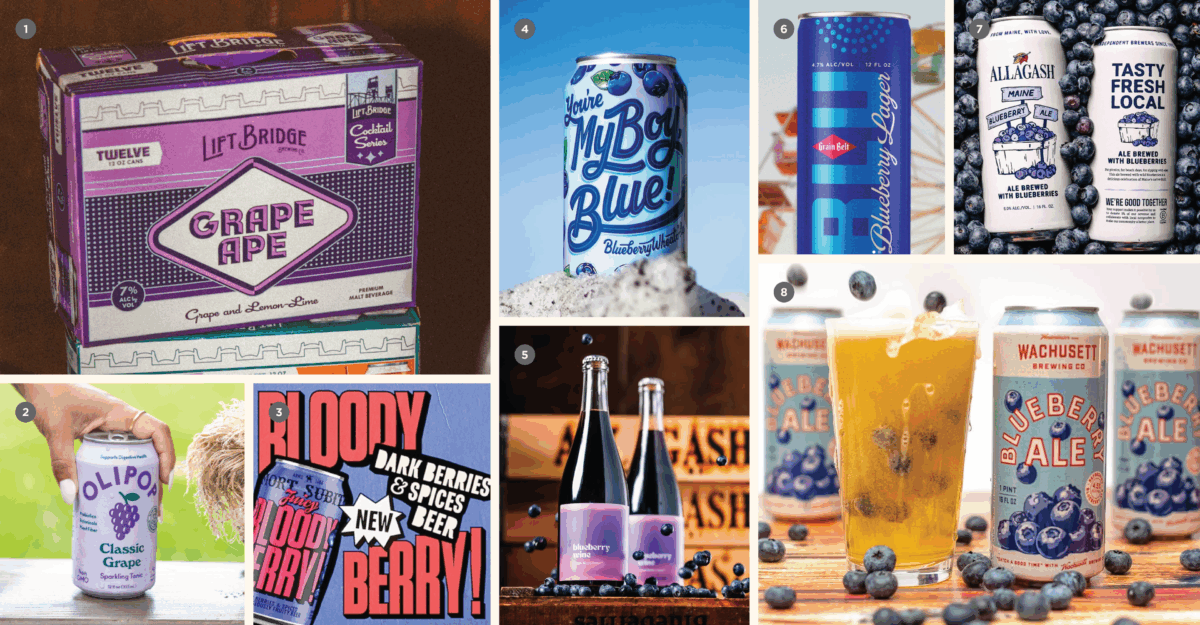
In a world where consumer attention is stretched thin, products that feel easy to understand — even before you crack the can — have a leg up. And today, that usually means one thing: Familiar flavor cues, presented in plain English. 

Grape
Peach
Blueberry
Blackberry 
Lemonade
Tea
Coffee

These aren’t just ingredients — they’re signals. They tell people what to expect. They cut through clutter. And more importantly, they feel comfortable in a landscape that’s often overloaded with category jargon, hazy design, and clever-but-confusing brand names.

1. Lift Bridge Brewing, 2. Olipop, 3. Mort Subite, 4. Florida Avenue Brewing, 5/7. Allagash, 6. Grain Belt, 8. Wachusett Brewing

This isn’t about dumbing anything down. It’s about meeting drinkers where they are. When you lead with flavor — instead of brewing technique, beer style, or clever brand architecture — you lower the barrier to trial. You make the decision easier. And when the product delivers, you build trust that brings people back.

This idea is playing out in a few key ways:

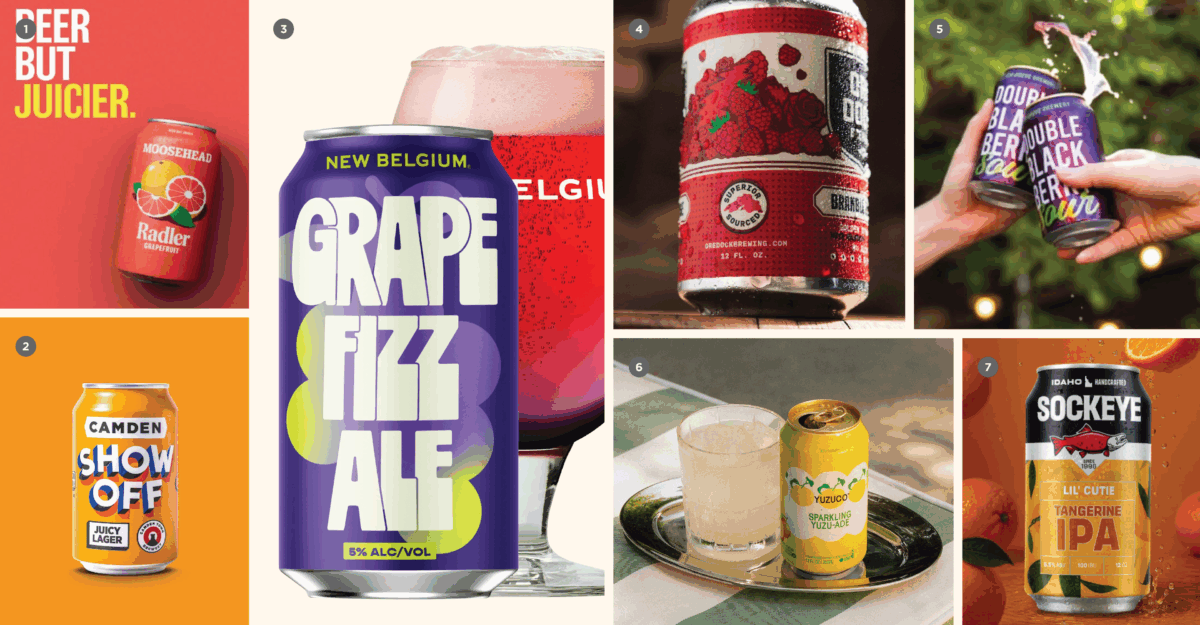
Fruit-first beers — Grape, peach, blueberry, watermelon, blood orange. These flavors bring soda and juice expectations into beer, creating a familiar bridge into new territory.

Pickle beers — What started as a stunt is now a staple in some markets. It works because the flavor is specific, craveable, and crystal clear. (We see this as a sleeper bet for 2026 — it’ll probably be regional, but I bet we see a lot of excitement around this style.)

Half & Halfs — Lemonade and tea plus beer is instantly legible. You don’t have to explain it. People already know what it’s supposed to taste like. (We’re exploring this in another 2026 exclusive)

-ADEs — From Yuzu-ade to Spike-ade, this naming convention borrows equity from decades of citrus-forward, refreshing drinks. It makes something new feel old and obvious — in the best way.

And then there’s juicy. The most elastic descriptor in the beer space right now. Juicy IPAs. Juicy pilsners (blasphemy!). Juicy radlers. It signals freshness, sweetness, intensity, texture — without needing a long explanation. Just hearing the word gives you a taste in your head.

The big takeaway here: Flavor is the fastest way to get people in the door. It builds familiarity. It invites trial. And it gives your beer — or Beyond Beer product — a fighting chance in an oversaturated market.

So if you’re stuck on your next release, or wrestling with how to explain a weird new concept, zoom out.

Start with something familiar.

Say it clearly.

Let your beer do the rest.

1. Moosehead, 2. Camden Town, 3. New Belgium, 4. Ore Dock Brewing, 5. Big Grove Brewery, 6. Yuzuco, 7. Sockeye Brewing

Why small format cans are gaining traction
How novel packaging can unlock new occasions, better margins and premium positioning 

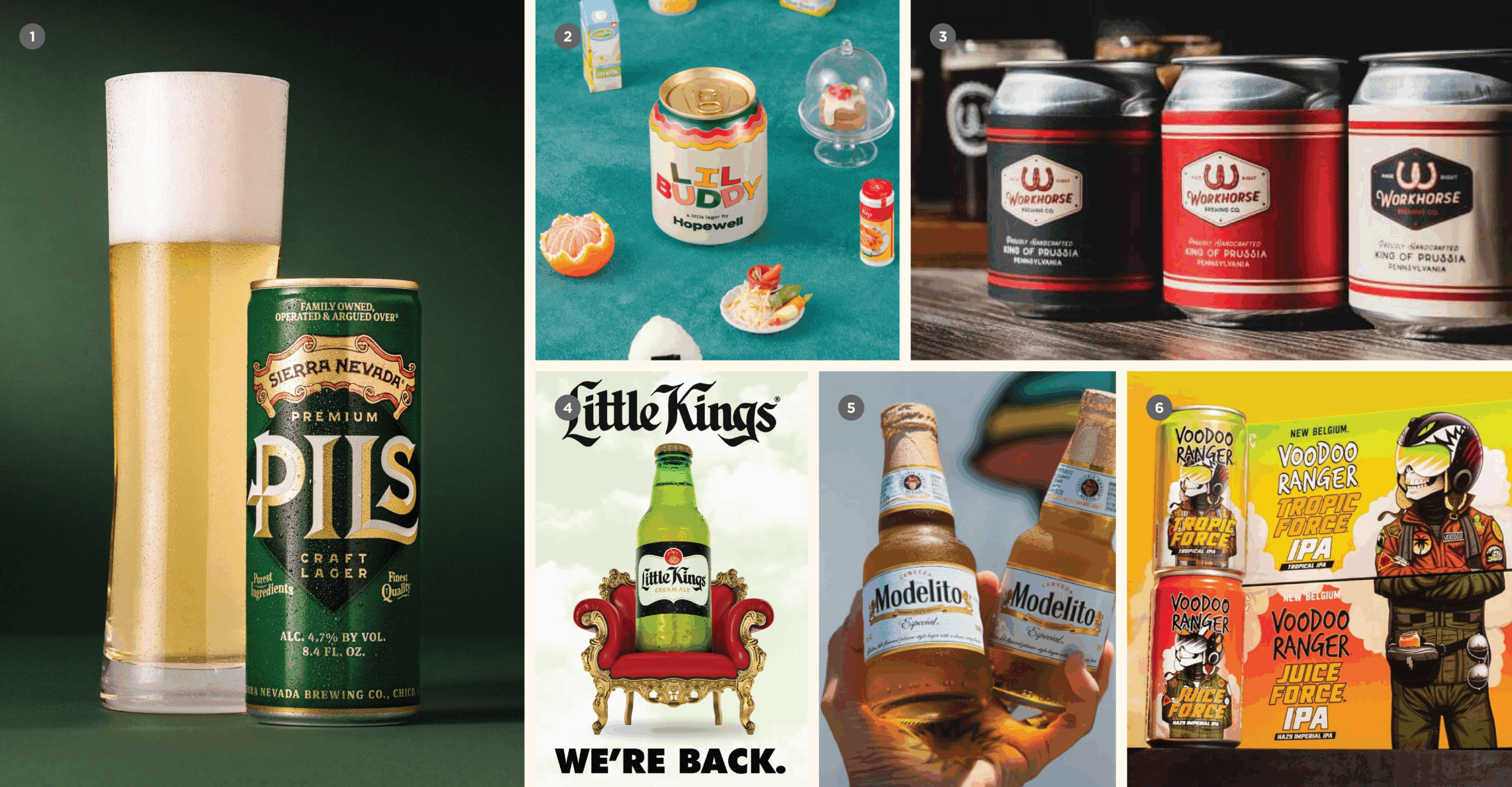
The rise of small formats started with 12oz slims, but we’re now seeing breweries experiment with even smaller sizes — 8oz, 7.5oz, and bespoke 3.4oz cans. What was once the domain of high-octane offerings (mini barrel-aged stouts, pastry bombs, 14% waxed monsters) is evolving into something lighter, more playful — and possibly, more strategic.

Think mini rippers, not just sippers.

For some brands, this is about moderation — a high-grab, high-energy refresher you can house after a run. For others, it’s a fun-sized novelty that injects personality into the cooler. A break from the 16oz monoculture. A flex. A gimmick. A trial vehicle. A vessel for a very specific mood.

One of our favorite examples here is Modelito. Is there a better beer name on earth? It’s the perfect balance of irreverence, form factor, and occasion-based branding. A beer that exists because it’s small. And smart.

If you can run these formats (the dies, the tooling, and your canning line all have to line up), they open up some fascinating lanes for innovation. Small cans can deliver real utility — convenience, moderation, trial, better price points. But they can also carry weight when treated seriously — when you build a real reason for the format to exist.

This is where personality matters. These are fun. And yeah — they’re a little faddish. But with the right intent, you could strike gold and create something that actually resonates. Something with a clear point of view.

A classic Law of Category play: If you’re first to own a format in your market — even if the beer inside isn’t radically different — you might get outsized credit just for showing up differently.

One potential unlock? Retail support for singles. If chains start treating small-format beer like wine minis or shooters — stocking them at checkout, bundling them for gifting, pairing them with snacks — that could dramatically accelerate adoption across beer, RTDs, and non-alc alike.

If the logistics line up, this is a format worth watching. Or better yet — one worth owning.FPoP

1. Sierra Nevada, 2. Hopewell Brewing, 3. Workhorse Brewing, 4. Little Kings, 5. Modelito, 6. Voodoo Ranger

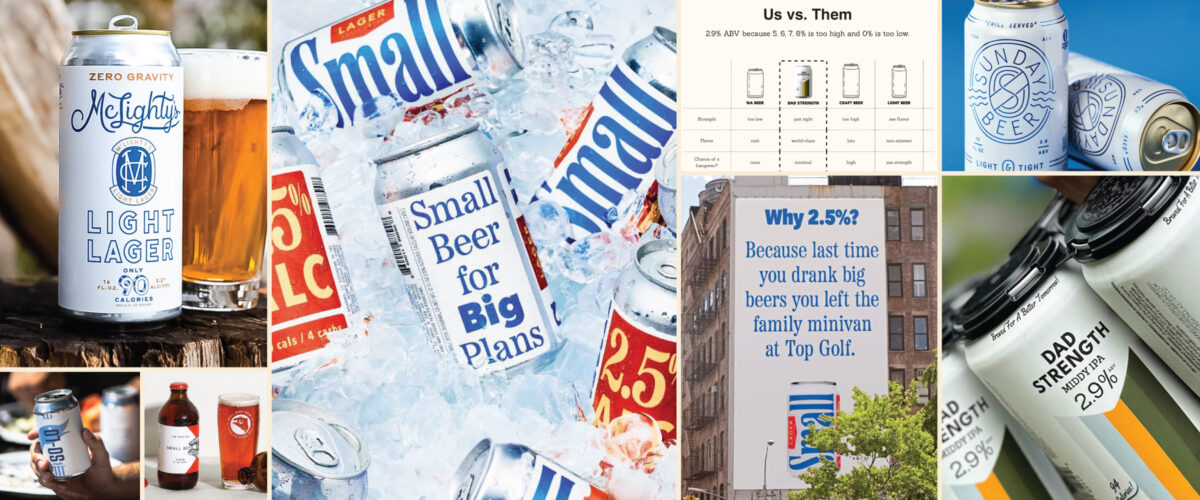
Small beer, big opportunity?
Why sub–4% beers are poised to define the next era of mindful drinking


We’ve started noticing more small beers — true small beers — popping up in taprooms across the country. Not session IPAs. Or watered down macro lagers, but clean, intentional, sub-4% ABV beers that still bring full flavor and a sense of craft.

Some are Czech-inspired. Others are hopped like a West Coast Pale Ale. And a lot lean into being… beer-flavored beer, (only smaller).

In any case, the pitch is clear:

– More crushable means you can drink more in one sitting (the most important value prop)

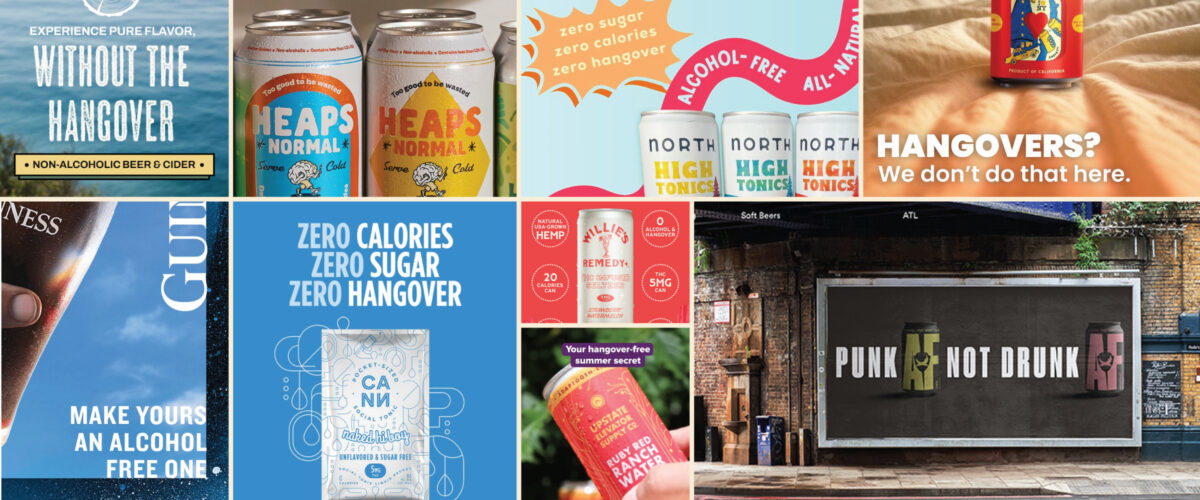
– Less alcohol means a lessened hangover

– Lower calories (presumably)

– A more well rounded flavor than NA beer

– Cheaper to produce

– Tailor-made for day drinking moderation (which can open up more occasions)

Whatever your preferred benefit, we think there’s something here and expect to see this segment grow.

And as the beer category continues to stretch in two directions — toward high-gravity bombs on one end and fully non-alc offerings on the other — this low-but-not-zero middle ground could become an interesting place to play.

Not just for consumers, but for brewers looking to stretch their brand, sharpen their positioning or simply sell more beer to folks who want to hang around a little longer.

Let’s dig in.

The Half & Half Opportunity
Why Beer + X Could Be the Next Flavor Frontier


Today I want to outline an emerging opportunity we’re watching closely — something that’s starting to show up in our project work on a few forward-thinking releases, and could become a meaningful innovation path in beer over the next few years.

We’re calling these “Half & Halfs.” The basic idea is simple: Beer + X. (Where X is lemonade, tea, cider — or any combination of fruit, spice or even functional ingredients.)


Think of it as pairing a primary base — beer, cider or a cocktail — with a complementary flavor to create something new, novel, and most importantly, flavor-forward.

This isn’t a full-blown trend (yet), but the consumer signals are all there — and we think this approach could be a powerful tool for breweries looking to stand out through flavor-first innovation.

So let’s run through how we’re seeing this take shape — and how your brewery might approach these products from a branding, positioning and Brand Architecture standpoint.

Where are all the cannabis NA beers?
One of the strongest value props in NA — so where is everyone?


For a product with one of the most compelling value props in beverage today, there sure aren’t many of them on shelves.

Cannabis-infused NA beer (setting aside the hemp-derived vs. D9 nuance — let’s just call it “cannabis” here) sits at the intersection of several major shifts:

Mindful drinking

Functional ingredients

Cannabis normalization

Full-flavor, low/no ABV options

A more mature, intentional approach to unwinding

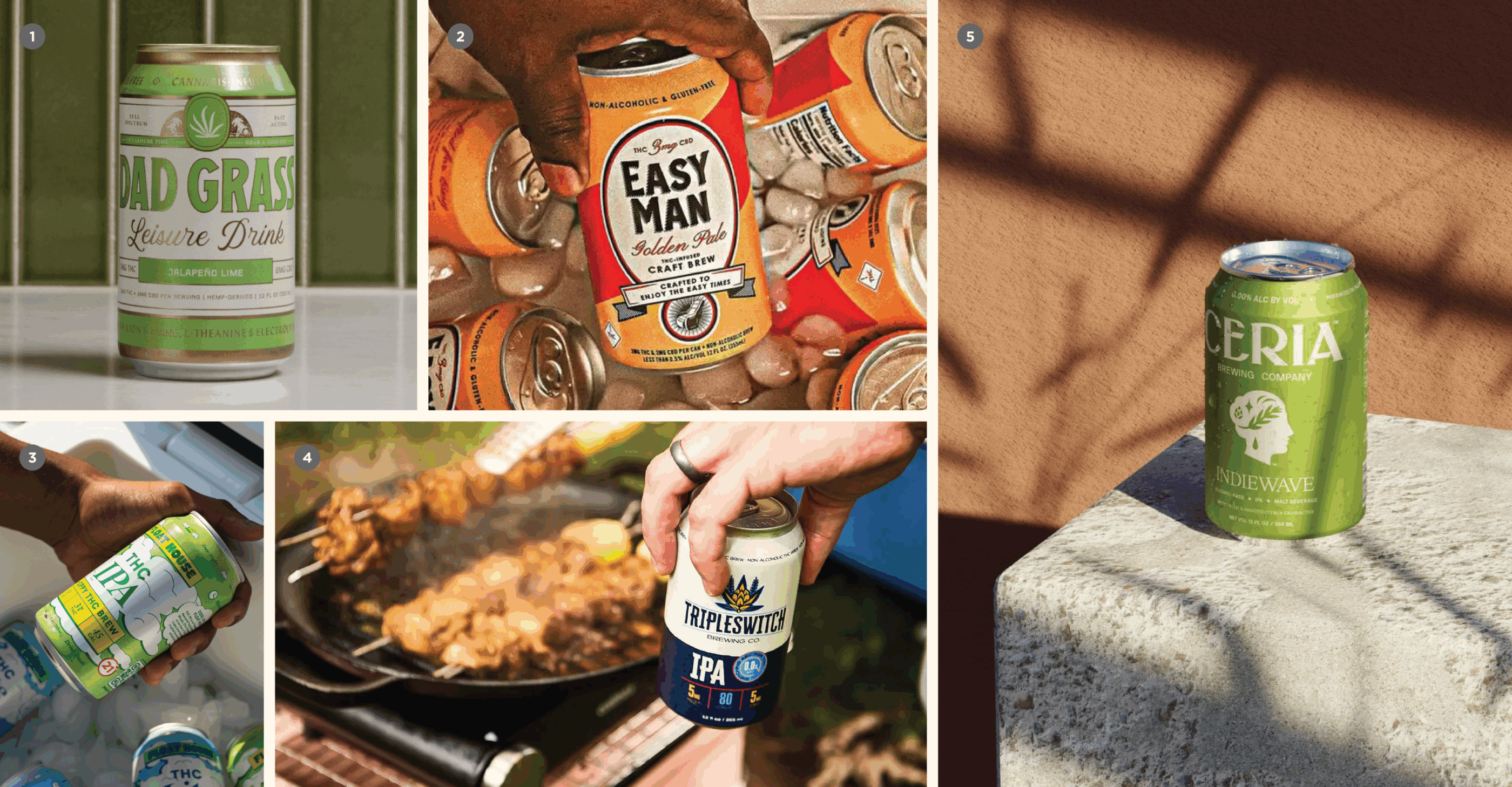
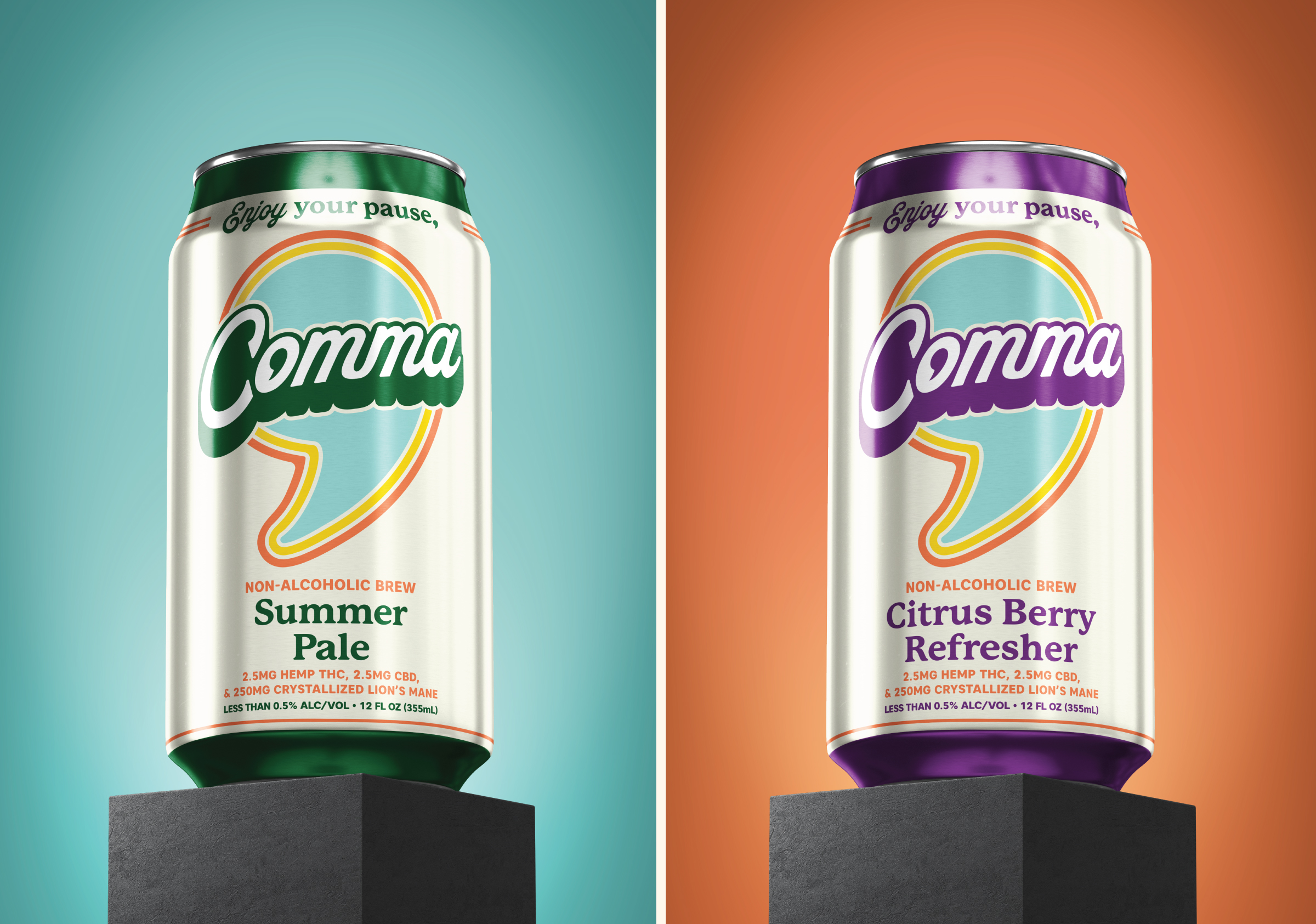
You’d think this would be a crowded space already. But so far, we’ve only seen a handful of brands jump in: Comma, Easy Man, Ceria, Triple Switch, and a few scattered others.

So, where is everyone?

The value prop is clear — a familiar format with just enough buzz, no hangover, and a more social, sessionable cannabis experience. But there are a few things holding this segment back:

Consumer education still matters. This is changing fast, but there’s still a need to demystify what the product is, how it feels, and when to drink it.

Regulations are messy. Distribution, formulation, and packaging are all in flux. Some brands are stuck in R&D or compliance purgatory.

Portfolio tension. Breweries have to figure out how to launch cannabis beverages alongside their core offerings — without undermining them.

Let’s dig into that last one.

1. Dad Grass, 2. Easy Man, 3. Float House, 4. Triple Switch, 5. Ceria

When a cannabis NA product contradicts your core

This is one of the trickiest parts of launching a cannabis-infused NA beer.

A cannabis release doesn’t happen in a vacuum. These products live on the same website. The same taproom menu. Sometimes even in the same cooler.

If your messaging leans too hard on what the product isn’tNo alcohol. No hangover. No regrets. — it can subtly position your core lineup as the “bad” option. Your cannabis SKU might gain traction, but your beer brand takes a hit.

Note: This challenge isn’t unique to cannabis. We explore this same tension in one of our 2026 BBT exclusives: How to Launch an NA Product Without Undermining the Rest of Your Portfolio.

The short version? If your brand also sells alcohol, any zero-proof launch — whether it’s NA beer, hop water, or a cannabis beverage — has to be framed with care. If you paint alcohol in a negative light, you risk undermining the very products that built your brand.


The additive mindset

The most effective cannabis and NA positioning we’ve seen doesn’t shame drinkers out of beer — it invites them into something new. It’s not about subtraction. It’s about expansion.

– More occasions

– More flexibility

– More ways to unwind

If you’re launching a cannabis-infused NA beer, don’t just tout what it removes. Talk about what it adds: mood, ritual, presence, social connection. And frame it as different, not better. Otherwise, you’re training your customers to abandon your portfolio — not expand how they engage with it.


Tone matters, too

This isn’t just about what you say — it’s how you say it.

If your core brand voice is fun, irreverent, or beer-first, then suddenly turning buttoned-up or wellness-heavy for your cannabis product can feel off. Disjointed tone makes it harder for consumers to trust that this new thing is still you.

So as you’re building the language around your cannabis-infused NA beer, make sure it still sounds like your brand. That doesn’t mean you can’t be more thoughtful, or more mature — it just means you have to stay consistent. Respectful of your drinker. Clear in your intent. Confident in your lane.


The brands that will win here are the ones that add something meaningful — to their portfolio, to the occasion, to the person drinking it — and communicate that with clarity and care.

We’re eyeing this space carefully — and candidly, we might even invest in it. From what we’re seeing, there’s nothing but runway ahead.

Comma reframes the pause — not as abstinence, but as expansion. It’s a cannabis-infused NA beer that makes room for new occasions without casting alcohol as the enemy. Confident, grounded, and quietly radical, it adds to the ritual instead of replacing it. Read more about how we helped bring this brand to market here.

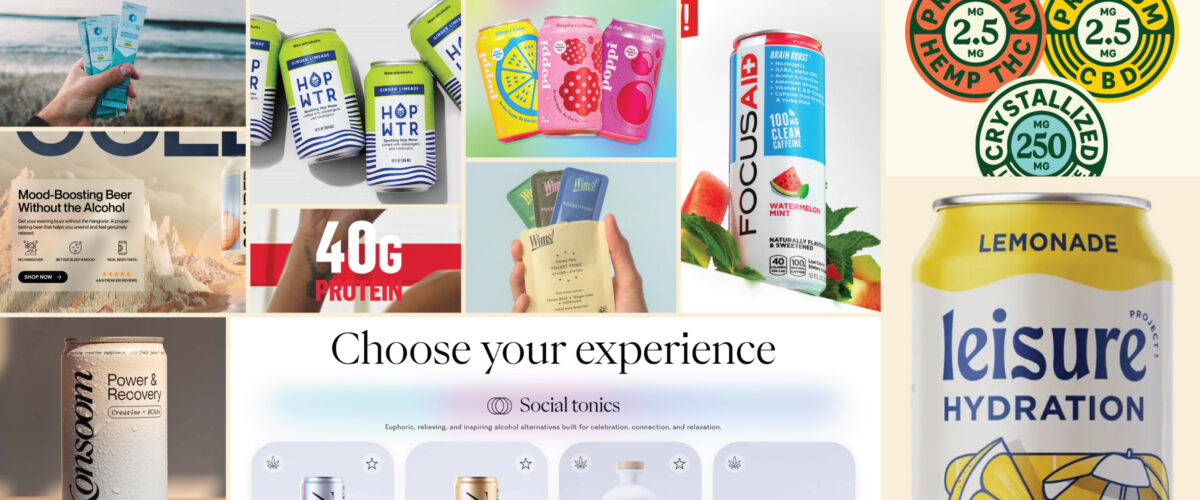
Function 2.0
The next wave of beverages is built around outcomes — not ingredients


Functional beverages are nothing new.

If you want to throw it way back, these started as a simple proposition: Beverage + exotic ingredient. 

This first wave — Functional 1.0 — included brands like Gatorade, Vita Coco and POM Wonderful. 

Throw in some ginseng or acai and promise a maybe-real(?) benefit. No need to overthink it, the value was in novelty. The more obscure the ingredient, the more “functional” it seemed.

Now, we’re seeing Functional 2.0 take hold. 

In an era when people wear Whoop bands, non-diabetics track blood sugar and everyone’s looking to squeeze more output from their day, approaching new product development this way makes sense.

Function has shifted from ingredient novelty to intent. It’s goal-oriented, occasion-driven and tied to specific outcomes you can actually feel — mapped to the exact moment you want them. Energy, focus, calm, recovery, libido, meal replacement.

And the exciting part for breweries? There’s opportunity around the clock — literally a beverage for every moment of someone’s day.

So in this exclusive, we’ll break down how to think about day-parts and functional opportunities so you can see exactly where your brewery can credibly show up.

Section 4: Beer Package Design Trends


For the last 10 years, we’ve wrapped these annual reports with a fun section outlining the most interesting visual trends we’re seeing in the wild — part celebration, part packaging inspiration. It’s always been a chance to highlight the beautiful, weird and memorable stuff that makes beer branding such a joy to work on.

But as our work, and these reports, have grown more strategic, we’ve found this section getting less and less valuable compared to the rest of the content.

So — apologies to our designer friends out there — we’re trying something different this year.
Instead of rattling off 10 aesthetic patterns, we’re highlighting just two visual trends — but giving them the same depth, nuance and strategic weight as everything else in this review. Because the best visual trends aren’t just about design — they reveal something deeper about how beer brands are evolving, and how you can better connect with your audience.

We think this shift adds more value than ever. But if you love (or hate) this new approach, we’d love to hear from you — shoot us an email and let us know what you think. (Please address all complaints to Cody. Thanks.)

Now, let’s dig in.

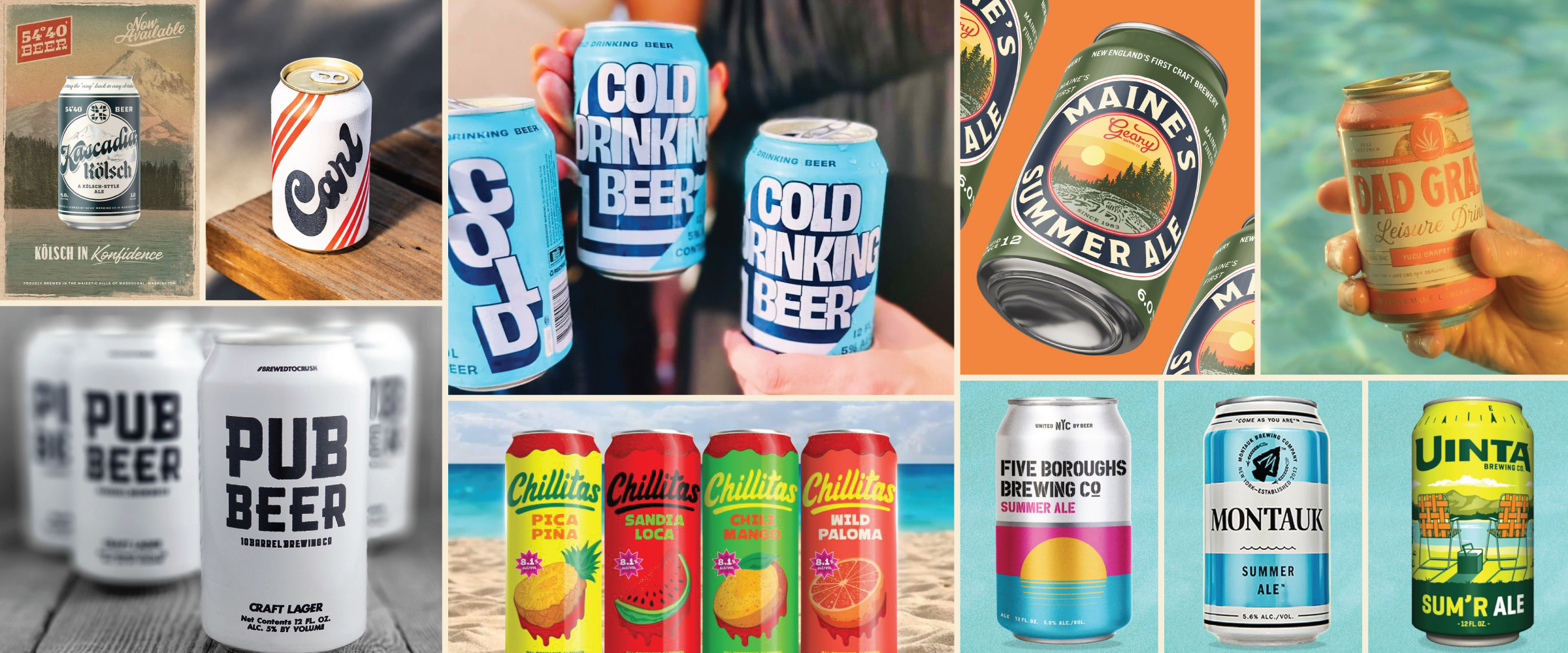
The surprising power of nostalgia in beer branding
Looking back to move forward — carefully


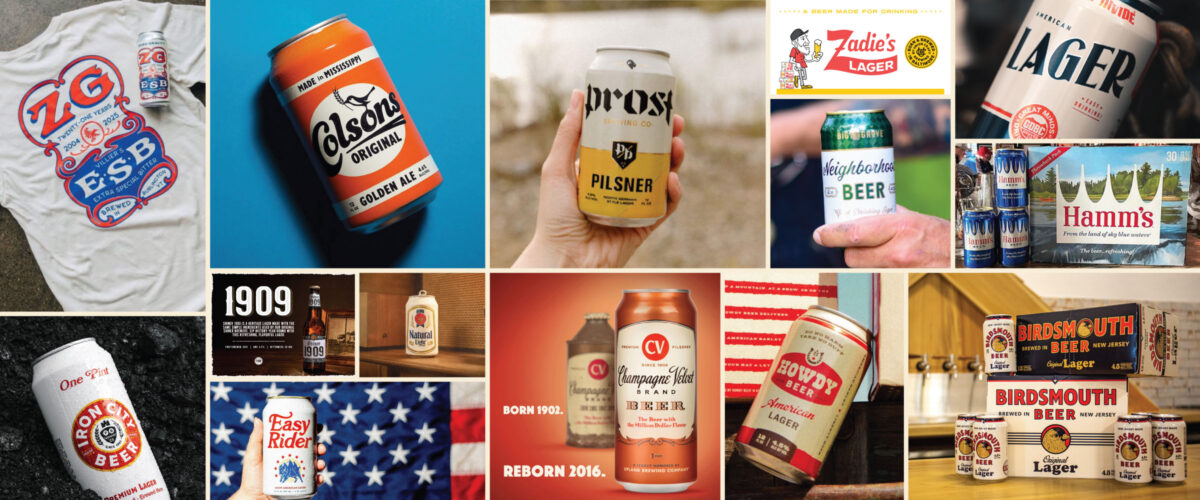
Nostalgia has always had a place in branding. But right now, it feels especially potent.

Look around: Beer labels that look like they came out of a 1987 cold box. Soda cans in heritage livery. Fast food chains reviving logos they retired decades ago. 

Even startup brands launching with faux-patina logos, born-on-dates (ESTD 2026 — Neat.), muted color palettes and typography that feels plucked from a time before half of their customers were born.

The instinct makes sense. Nostalgia offers comfort in an unstable world — a warm blanket for consumers navigating economic uncertainty, political tension and cultural fatigue (just doom scrolling their way through life). It’s shorthand for stability, familiarity and better days.

But while nostalgia can be a powerful lever in brand building, it’s not a free pass. 

We’ve been talking about this a lot around the shop lately, so today, I want to explore why nostalgia is working so well right now, as well as where it can backfire. 

Mascots 
How to add whimsy, energy (and risk?) to your brand 


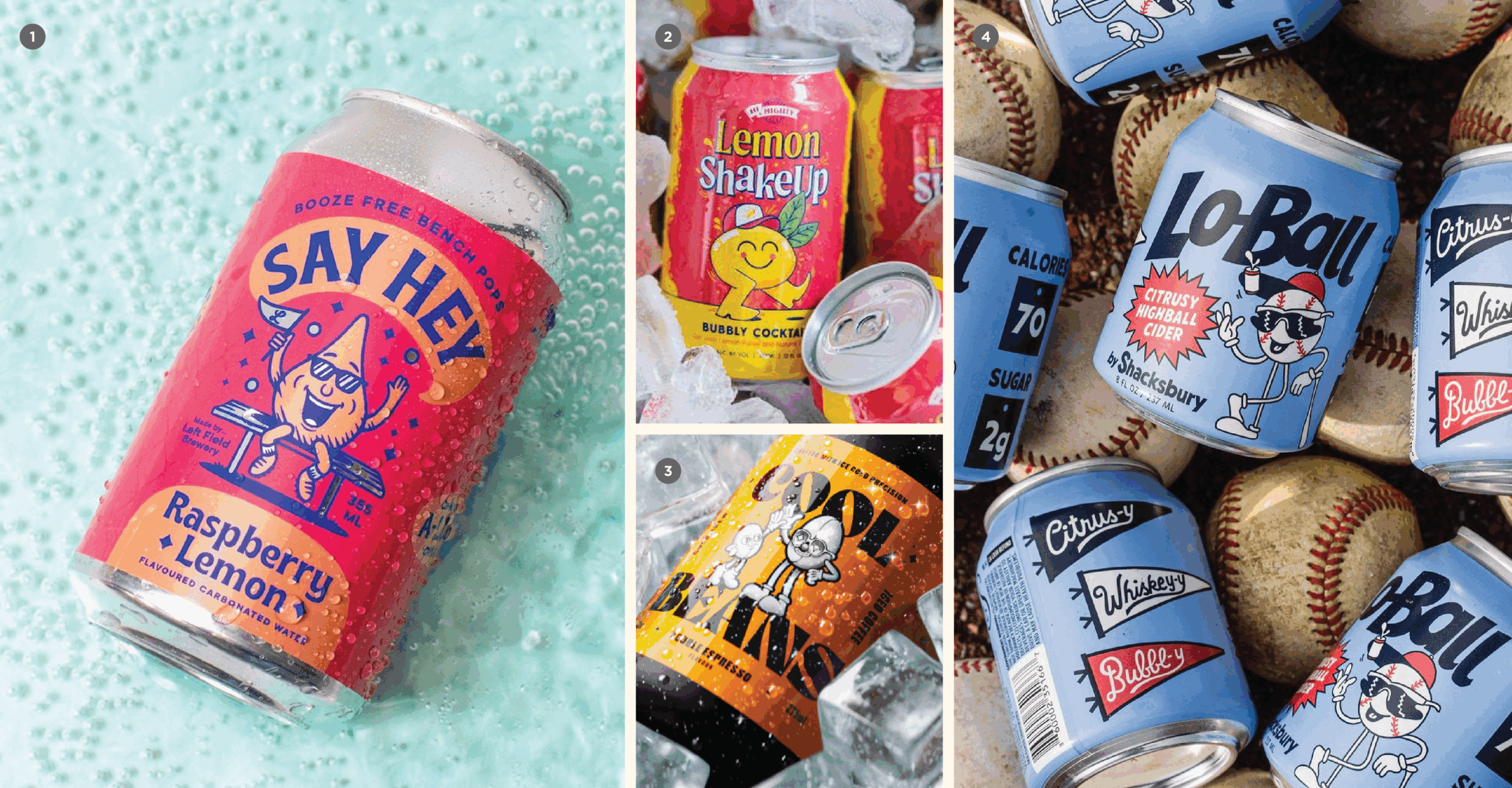
Mascots — specifically, the use of expressive, cartoony characters in beer branding — have moved from playful trend to core design move. You’ll find them everywhere now: on shelves, in merch programs, and across entire brand worlds in beer, coffee, wine and beyond.

We first noted this a few years ago, but it’s only picked up speed — and become more strategically interesting.

So let’s take a closer look at what’s happening, where it came from, and when it actually makes sense to give your beer can arms and legs.


A Quick Note on Terms

Let’s get this out of the way first.

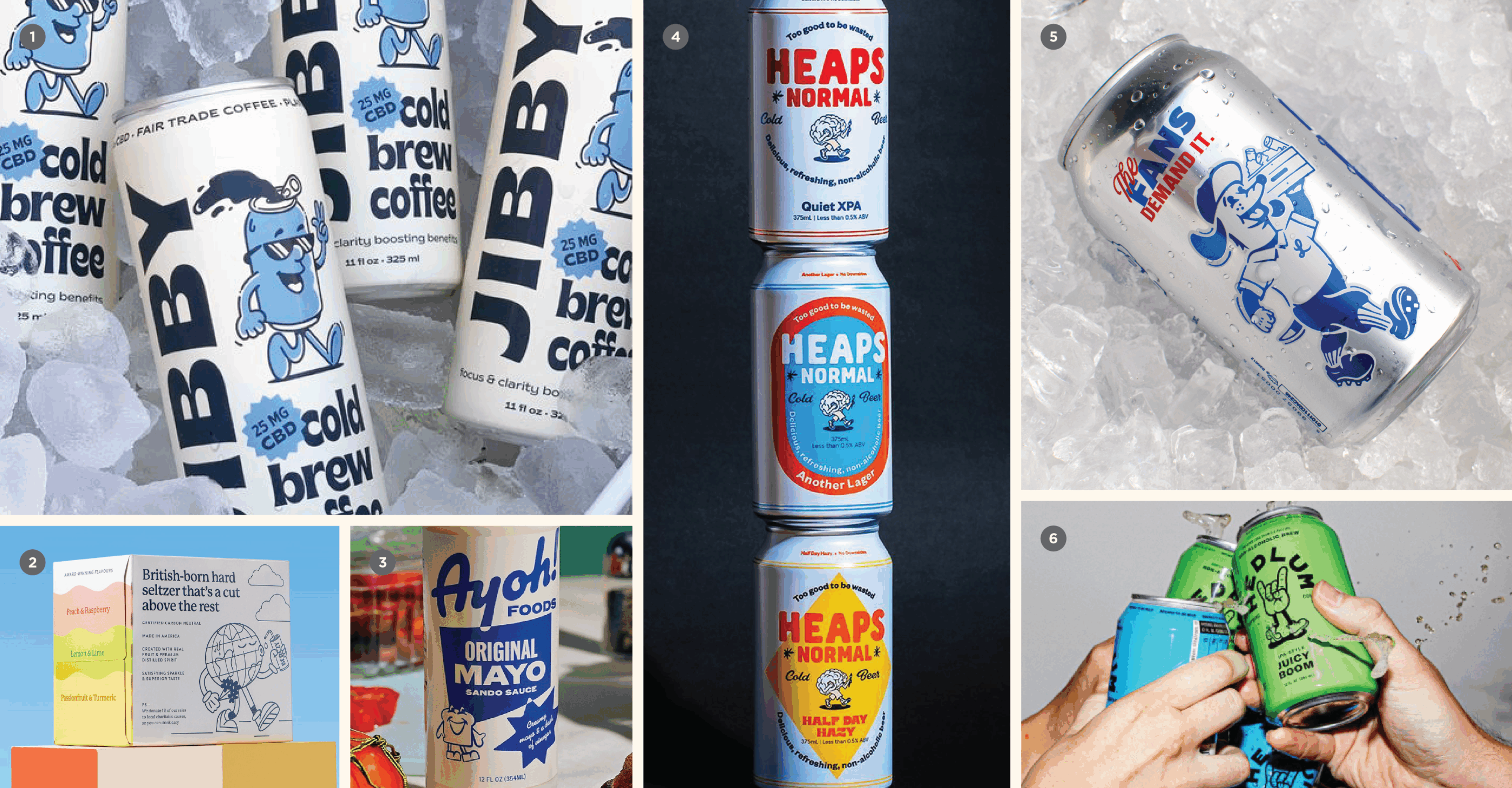
When we say mascots, we’re not always talking about traditional brand spokes-characters (e.g. Tony the Tiger, Mr. Peanut, Voodoo Ranger Skeleton, etc.). What’s more common in beer, and the broader CPG space, is something looser: An anthropomorphized thing.

A hop cone with eyes. A can with legs. A pint glass with wiggly arms. These aren’t fully realized characters. But they serve the same purpose — adding personality, creating visual interest and building emotional connection without a lot of extra work.

1. Jibby, 2. Berczy, 3. Ayoh!, 4. Heaps Normal, 5. Left Field, 6. Hedlum

A Brief Mascot Timeline (or our coverage of them, at least)

We first wrote about this trend back in 2021, when we noticed more breweries leaning into retro mascot design — stuff pulled straight from early cartooning, collegiate sports, and mid-century beer advertising. Goofy white gloves. Googly eyes. Comically bendy limbs. And lots of objects that suddenly had faces.

At the time, it felt fresh. A fun, low-risk way to inject some warmth and nostalgia into your brand.

Fast forward a few years and that playbook is everywhere. Not just in beer, but across coffee, wine, seltzer and nearly every corner of the CPG landscape. 


Why Mascots Work

They’re easy to remember

They’re visually expressive

They inject energy into your system

They make for great merch

And most importantly — they’re fun (no need to over think this)

And in a category where too many brands take themselves too seriously, that can be a breath of fresh air.

Mascots also come preloaded with a sense of nostalgia. Even if your drinker doesn’t consciously register it, there’s a familiar, comforting tone that calls back to childhood media, old advertising or sports branding. 

They feel friendly. And familiar. And human — yes, even when it’s a smiling hop cone.
1. Left Field, 2. Hi & Mighty, 3. Cool Beans, 4. Shacksbury

But Should You Use One?

Mascots are undeniably popular right now. But that doesn’t mean they’re right for your brewery.

If your brand is already expressive, irreverent or high energy, then a mascot might reinforce everything you’ve already built. But if you’re more classic, serious, or premium-leaning, it could easily undermine the tone you’ve worked hard to establish.

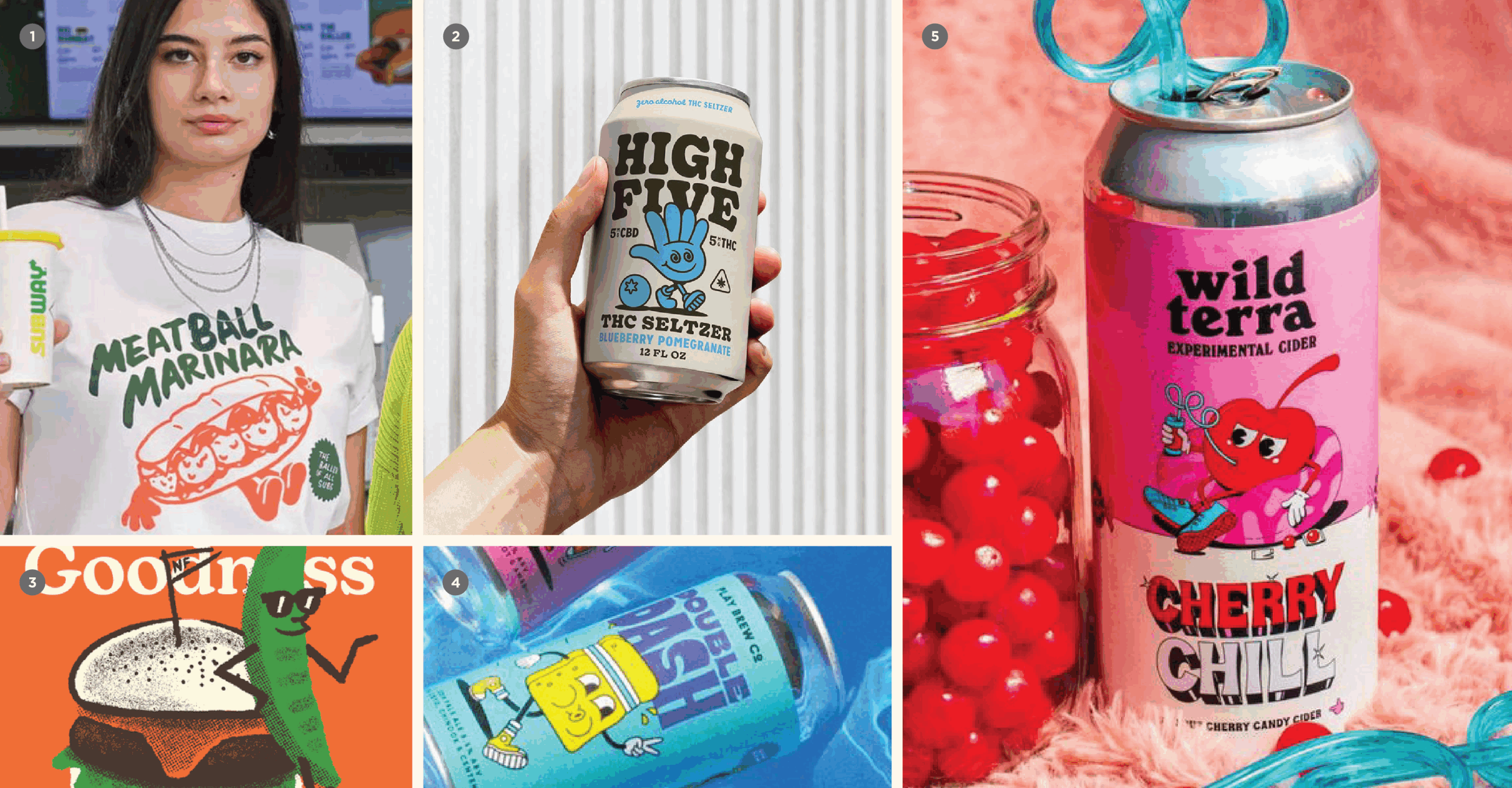
So here’s the question to ask: What does this mascot say about our brewery? And is that message aligned with how we want to show up?

If yes — go for it.

If not — find another way in.

1. Subway, 2. High Five, 3. Native Foods, 4. Play Brew Co., 5. Wild Terra

Three caveats before you start adding legs to everything


1. Use these like a spice — not the entire dish 

In most cases, it probably doesn’t make sense to build your entire brand around a mascot. Unless you’re running a full-on character-driven concept from the jump, this is likely too narrow (and too risky) for a long-term brand foundation.

Instead, think about using a mascot as a supporting asset. Something that shows up in your merch program, or as a recurring element within a particular Sub Brand or product line. When treated like a visual accent — not the core identity — mascots can add personality without dominating the system.


2. Be wary of IP infringement 

Here’s an uncomfortable truth: If you make a mascot today, you’re almost 100% guaranteed to create something that looks like someone else’s.

These are all copies of copies, after all. And with so many smiling hop cones, dancing beer cans, and googly-eyed coffee beans/pizza slices/coffee mugs out there, the odds of accidental duplication are sky high.

This isn’t the end of the world — but you do need to go into this with your eyes open. If your character looks even a little too close to something already out in the market, you run the risk of being accused of ripping someone off. And even if you didn’t — even if your team genuinely made it from scratch — that accusation still stings.

This is the kind of thing that keeps designers up at night. It’s not an existential threat, but it’s not a great look either.
All you’ve got in this world is your reputation. And it would be a shame to tarnish it over something this small.
 

3. Make sure you’re not marketing to kids 

One last point to consider. The beer and bev alc industry is regularly accused — fairly or not — of marketing to children. We’ve written before about how we don’t think this is happening intentionally in most cases. But it can happen inadvertently. And we have a duty to avoid it as best as we can.

Mascots come with decades of baggage from kids’ cereal, candy and toy advertising. They’re instantly associated with youth marketing — and that connection is hard to shake.

This doesn’t mean you can’t use one. But it does mean you need to be aware of how it might read, especially in certain regulatory or retail contexts.

We explored this controversial subject a few years back. Read more here: Alcohol & minors: What is our responsibility as designers?

Final Thought: Use Mascots With Intent — or Don’t Use Them at All

A mascot can be a fun addition to your brand, if it reinforces the identity you’ve already built, fits your tone and serves a clear purpose. But if it’s just there because you’ve seen other breweries doing it, that’s not a good enough reason.

This isn’t about following a trend. It’s about creating something that feels honest and distinctive. Because once it’s out in the world — on a can, on a shirt, on your tap handles — it becomes part of how people perceive your brand.

So make sure it’s saying something worth remembering.

And if it’s not? You can always just make great beer — no wiggly arms required.

Build a stronger brand.
Sell more beer.

Join 7,500+ other beer industry folks and sign up for CODO’s monthly Beer Branding Trends Newsletter.