Stories

How we rebranded Cowbell Brewing

A behind the scenes look at a sweeping rebrand for one of Ontario’s largest craft breweries.

Cowbell Brewing is the sixth largest brewery in Ontario.

Founded in 2017, they’ve grown rapidly, capturing market share across the province with a phenomenal hazy IPA and lager-centric portfolio.

Cowbell originally reached out to CODO for Brand Strategy and an identity refresh. That project quickly grew to encompass a full packaging overhaul — plus a handful of other fun deliverables along the way.

Today, we’re excited to give you a full behind-the-scenes look at this process, including:

Working through their foundational Brand Strategy
How to art direct a compelling idea 
How to position a brewery 
How to develop a powerful tagline
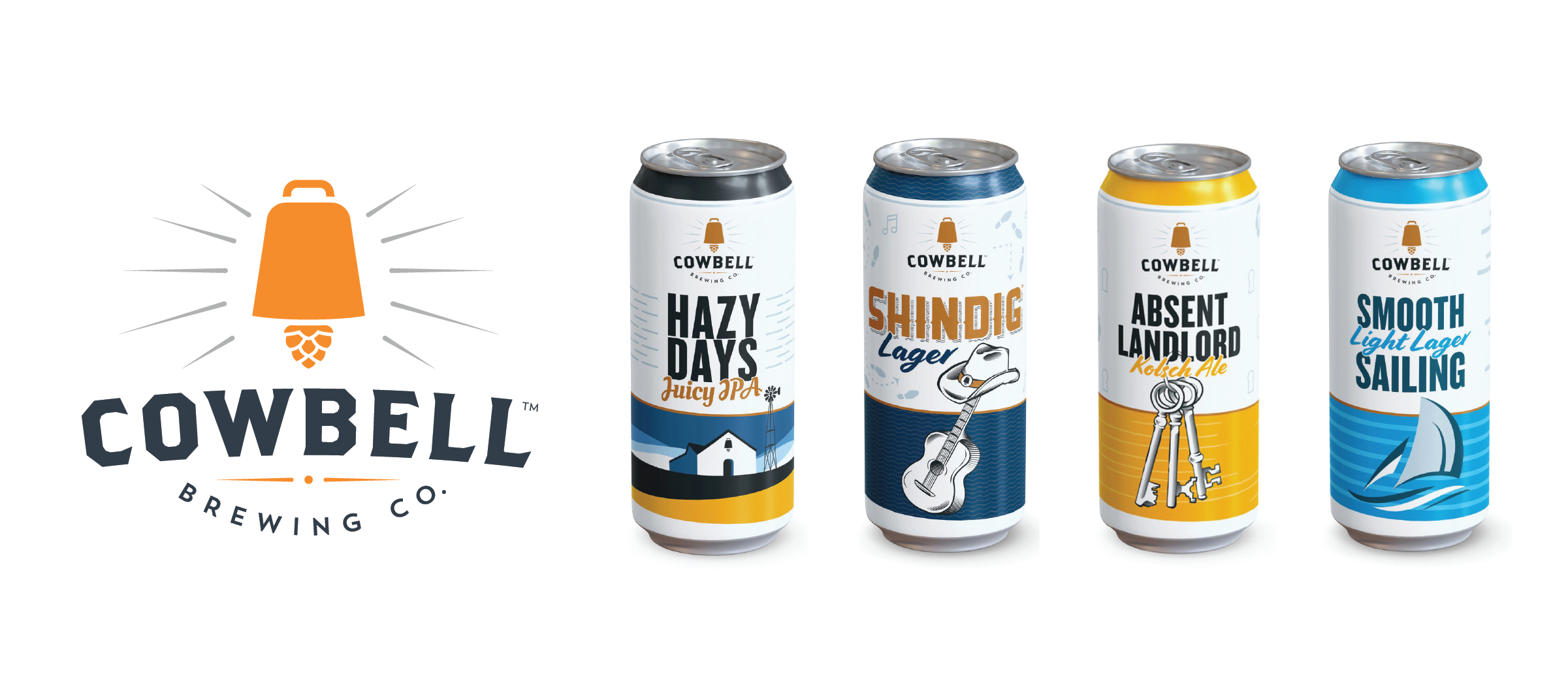
How we revamped their brand identity and packaging

Let’s get into it. 


***


We recorded a fun podcast episode with Natasha and Hannah from Cowbell. Listen to that here there for more background context on what went into this project. 

Cowbell’s “insane” brewery in Blyth, Ontario.

Background Context 

The most striking thing about Cowbell is their facility itself. 

It’s a stunning, 26,000-square-foot “cathedral to beer,” purpose-built for sustainability, nestled on a 144-acre property in Blyth, Ontario.

Not in bustling Toronto, not in Hamilton or Ottawa.

Blyth.

Surrounded by farmland and friendly cows, Cowbell’s brewery feels almost mythical in its rural setting. That contrast — a state-of-the-art brewery in the peaceful countryside — makes Cowbell one of the most fascinating breweries we’ve worked with.

Cowbell first reached out to CODO after resolving an IP dispute. This set a few constraints during the identity phase. But that issue only scratched the surface.

Early pain points we identified included:

A shallow identity system (essentially one logo)

Inconsistent packaging, featuring “cheap clip art” illustrations that didn’t reflect the beer’s quality

A portfolio overly-focused on lagers — raising questions about whether they needed to diversify with more contemporary, on-trend styles to better match today’s Ontario market

Packaging wasn’t optimized for the important LCBO channel

Beyond these, Natasha (President), Emily (Brand & Packaging Designer), and the rest of Cowbell’s executive team viewed this as a chance to unify the brand internally. A quote from our kickoff research sums this up:

“This spans brand identity and goes deeper into the company culture itself — what are we all here working toward? What is our rallying cry?”

Cowbell’s previous identity and packaging. 

Brand Strategy

Our Brand Strategy work laid out Cowbell’s audience, competitive set, mission, vision, brand values (all three tiers), and brand equity. Here are some highlights:

Key Messaging Pillars & Positioning

We honed in on a few core stories Cowbell can own:

1. An unreal facility: Even though most drinkers may never visit Blyth, this “cathedral to beer” story is worth telling.

2. Being a good neighbor: Cowbell has contributed over half a million dollars to community causes through their Greener Pastures Fund — an impressive commitment that deserves more emphasis.

3. Sustainability: Cowbell was built from the ground up to be as sustainable as possible. While we always caution breweries against leaning too heavily on this message alone, it remains an important pillar (just not the lead).

4. Rural vibes, rooted in Blyth: Perhaps the most compelling message: Cowbell embodies an aspirational, countryside escape — peaceful, open and authentic.

When someone picks up a Cowbell beer, what are they really buying? 

– A sense of place. 

– A slower pace. 

– A good time with friends, free from notifications and horrifying headlines.


Tagline Exploration

We all agreed Cowbell needed a tagline to capture this ethos in a quick, compelling way.

While Brand Essences typically aren’t public-facing, they can sometimes evolve into taglines. “Cowbell Country” emerged as a strong contender — capturing both a sense of place and attitude — and became a foundation for our design work.


Art Direction

Our challenge at this point in the process is to translate all of this messaging and positioning into visuals. This seems straightforward enough — Cowbell is the rural brewery. (*Dusts hands heartily.)

Country is having a moment, and while we want to ride this wave, we need to ensure we do so in an authentic way that will still work 10 years from now. 

But we also need to avoid leaning too far into kitsch or cliché territory. 

The key question we kept returning to: What is someone really buying when they drink Cowbell? What does drinking a Hazy Days or Shindig say about someone?


To capture these ideas, we explored three distinct Brand Essences:


1. Country Edge: Rugged. Confident. Refined but never precious.

2. Country Day Trip in a Can: Breezy. Welcoming. Casual charm with a spark of adventure.

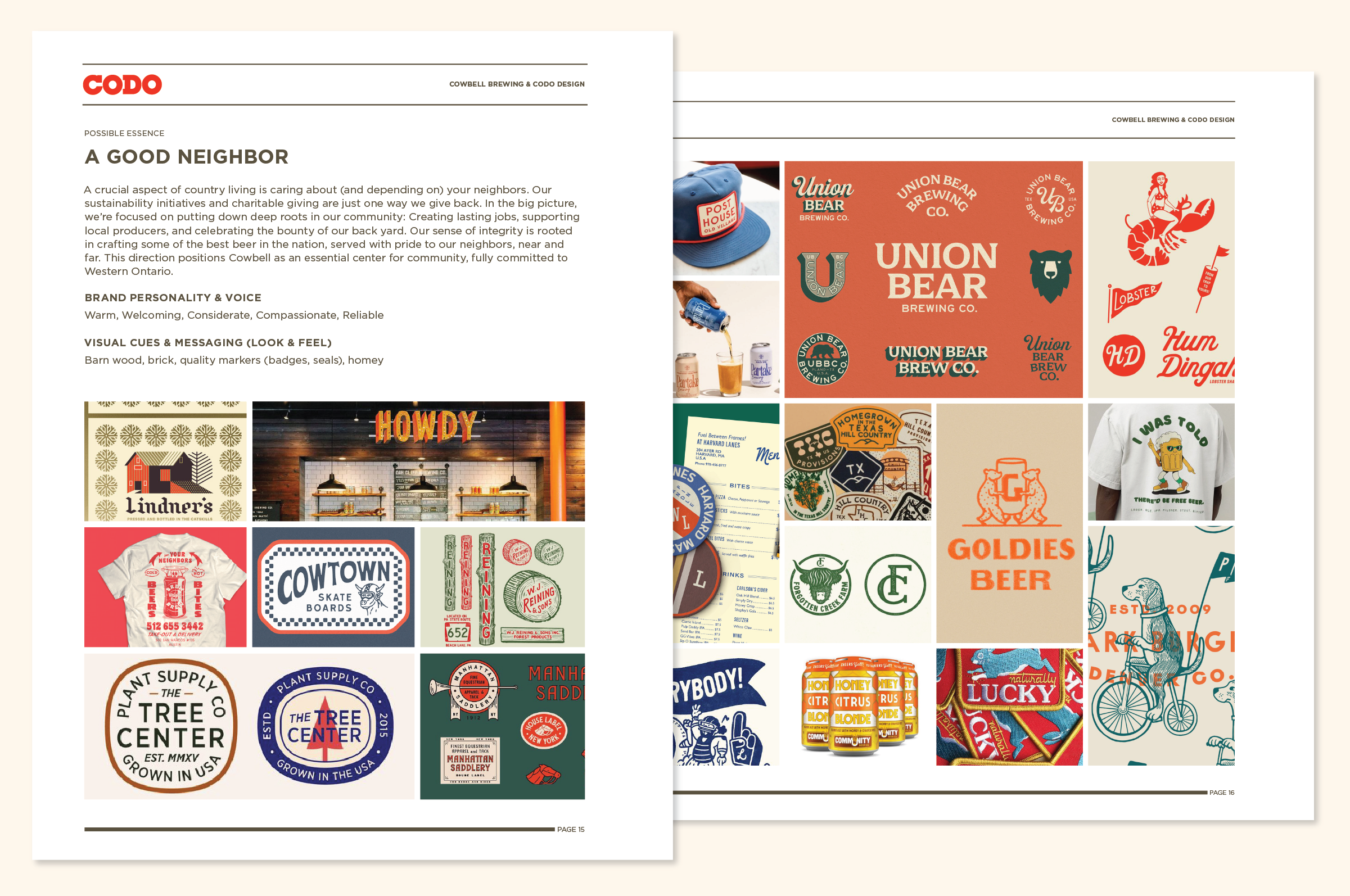
3. A Good Neighbor: Sincere. Helpful. A warm, down-to-earth presence in your fridge.

Cowbell’s initial Brand Essences and mood boards. 

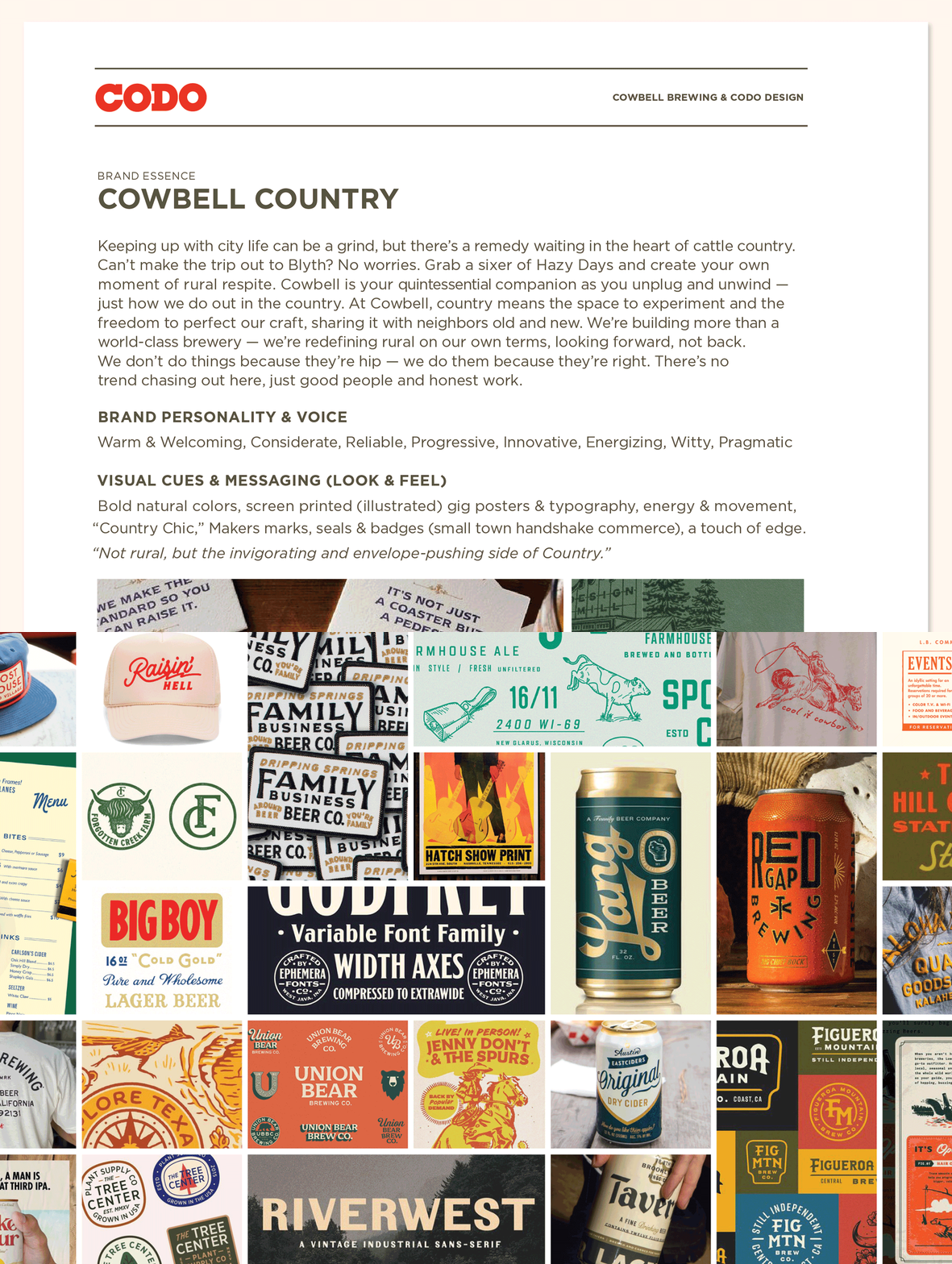
Ultimately, we blended Directions 1 and 2 into what we called Cowbell Country. This idea positions Cowbell as an aspirational rural brand. 

Here’s how we presented that idea in the revised Brand Essence:

Keeping up with city life can be a grind, but there’s a remedy waiting in the heart of cattle country. Can’t make it out to Blyth? No worries. Grab a sixer of Hazy Days and create your own moment of rural respite.

Cowbell is your quintessential companion as you unplug and unwind — just like we do out in the country. At Cowbell, country means space to experiment and freedom to perfect our craft, sharing it with neighbors old and new. We’re building more than a world-class brewery — we’re redefining rural on our own terms, looking forward, not back. No trend chasing here — just good people and honest work.


If we do this right, Cowbell can become an aspirational lifestyle brand — something people choose when they want to slow down, breathe and enjoy the moment.

With this foundational work squared away, our team rolled right into the brand identity design process.

Welcome to Cowbell Country. 

Designing Cowbell’s Brand Identity

Quick process note here: We intentionally share a wide range of options in our initial design presentations. We always preface this work by telling our clients, “We’re going to show you a lot of stuff today. Some of this will resonate, some won’t — and that’s part of the process.”

Cowbell’s initial presentation was no exception, with dozens of supporting marks, illustrations and tagline explorations. 

Cowbell’s initial brand identity presentation.

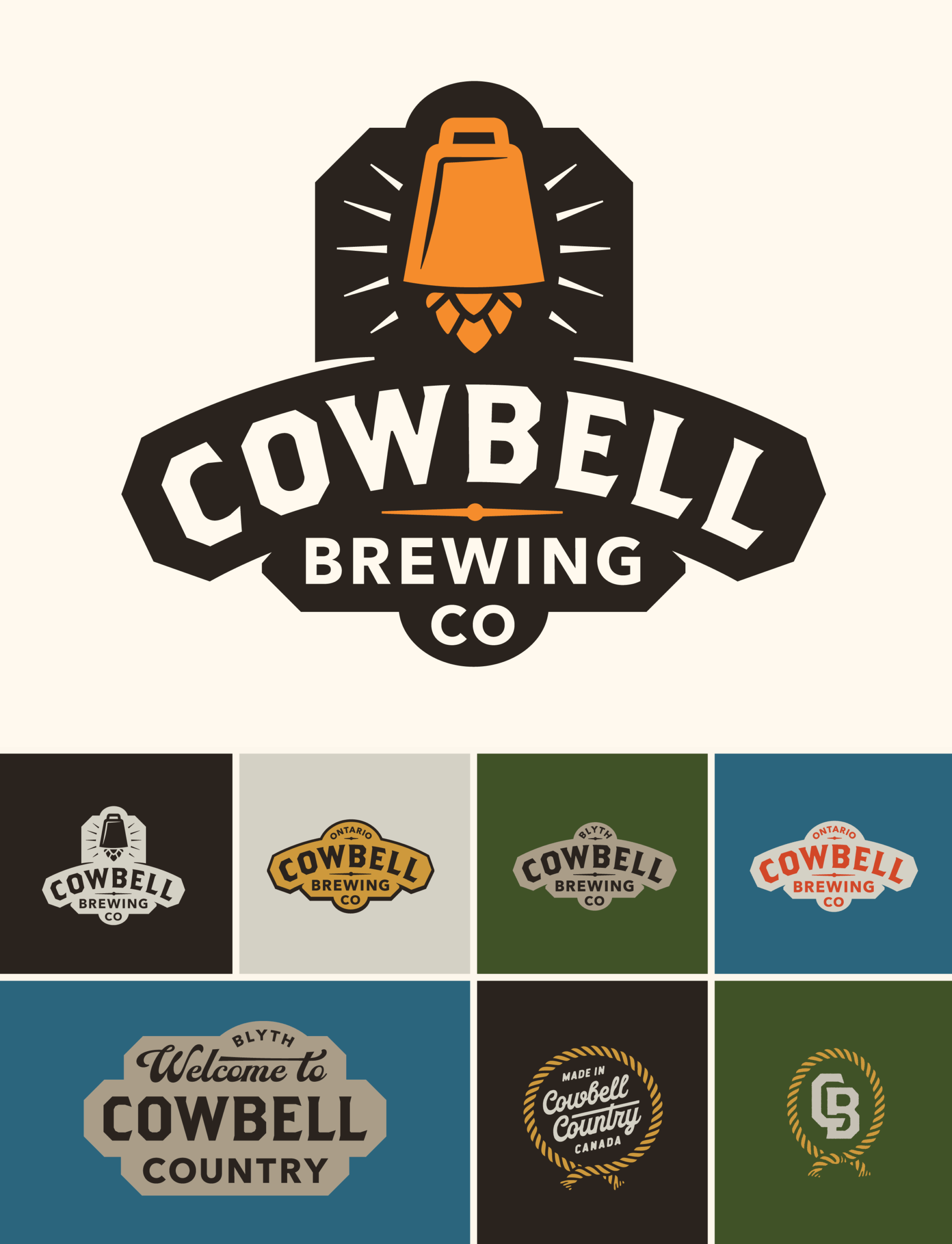
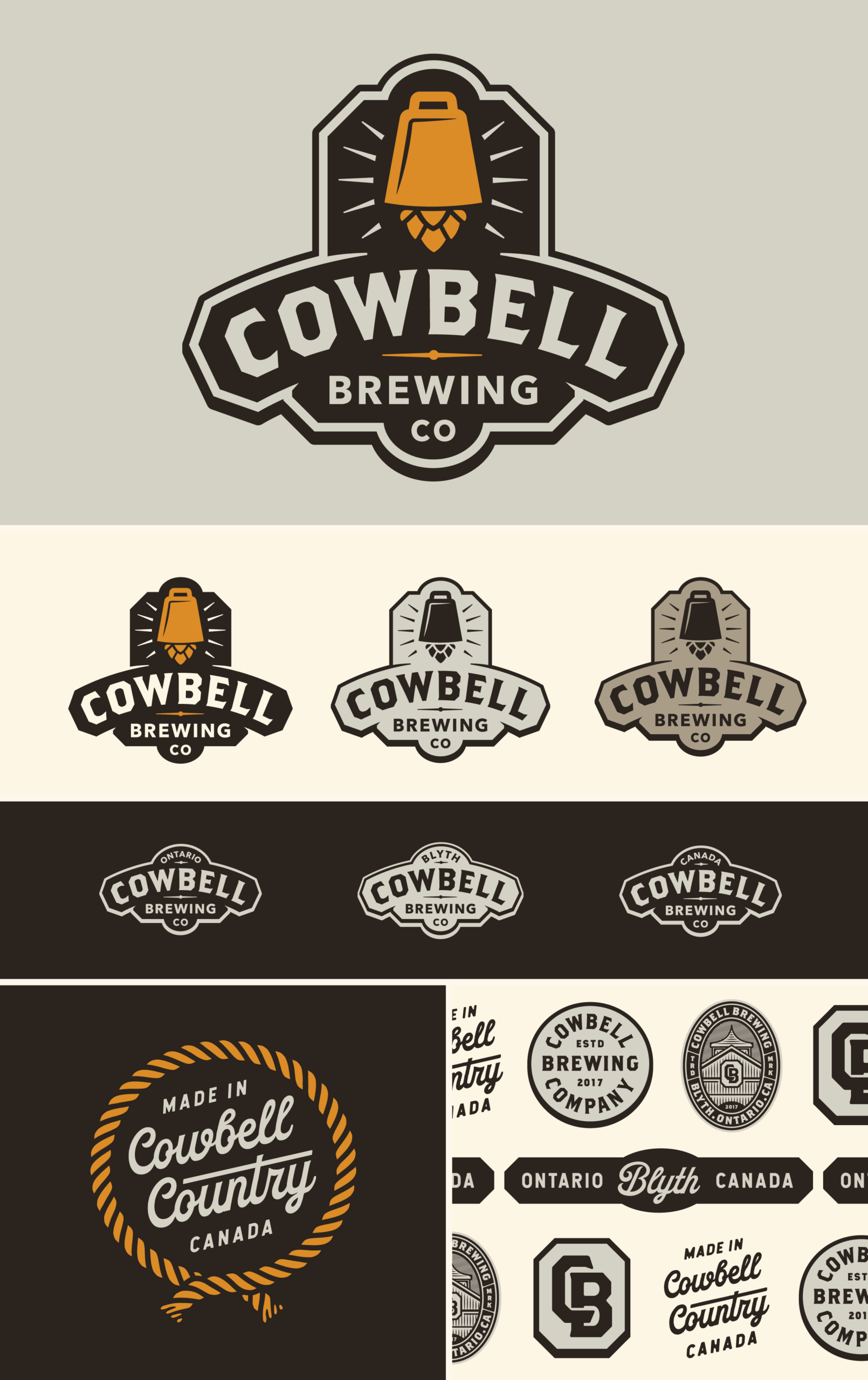
Cowbell’s main mark

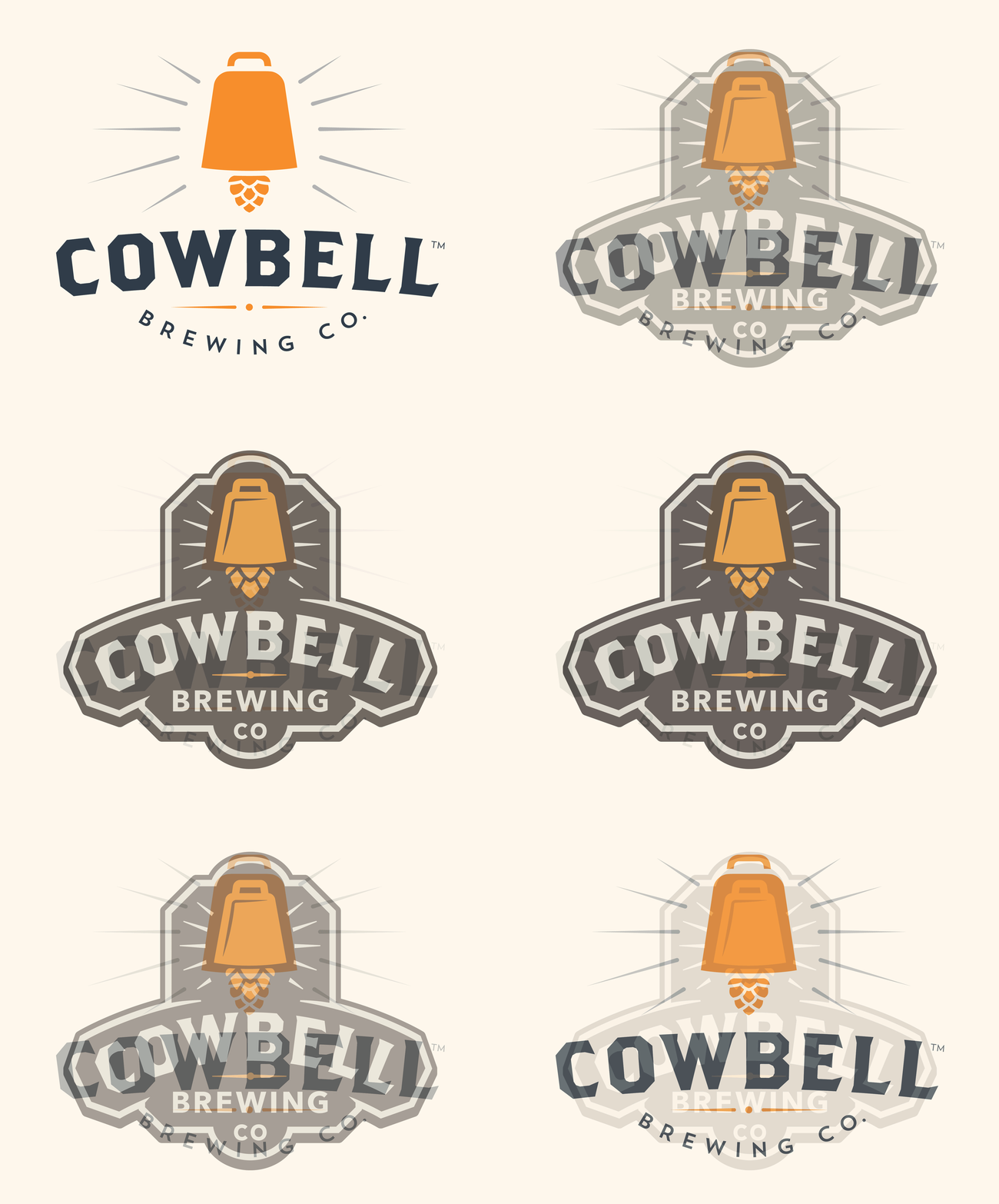
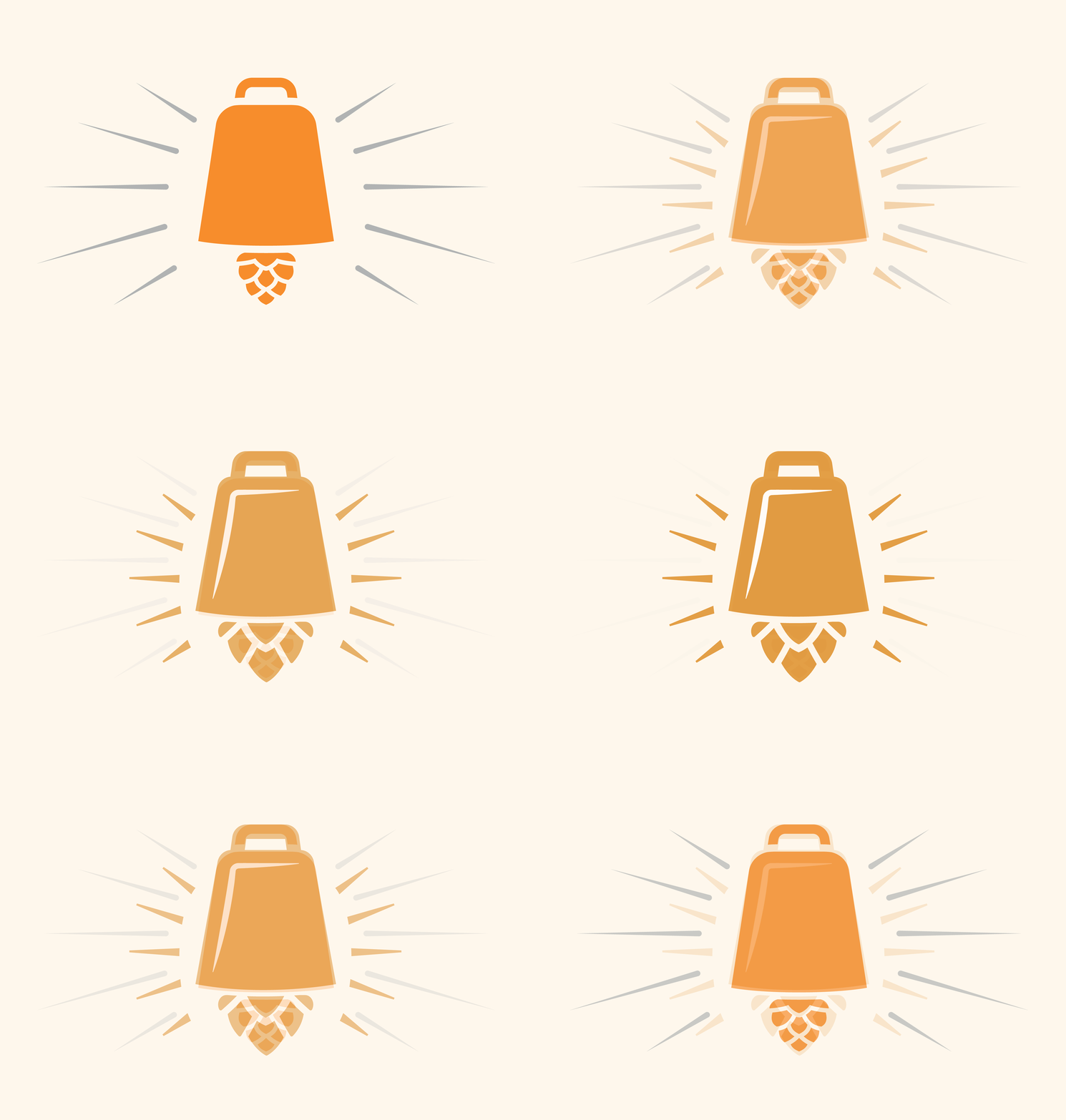
We cleaned up the hop bell icon and rays, then locked everything into a bold, confident badge. This improved contrast and made the mark easier to use across different applications.


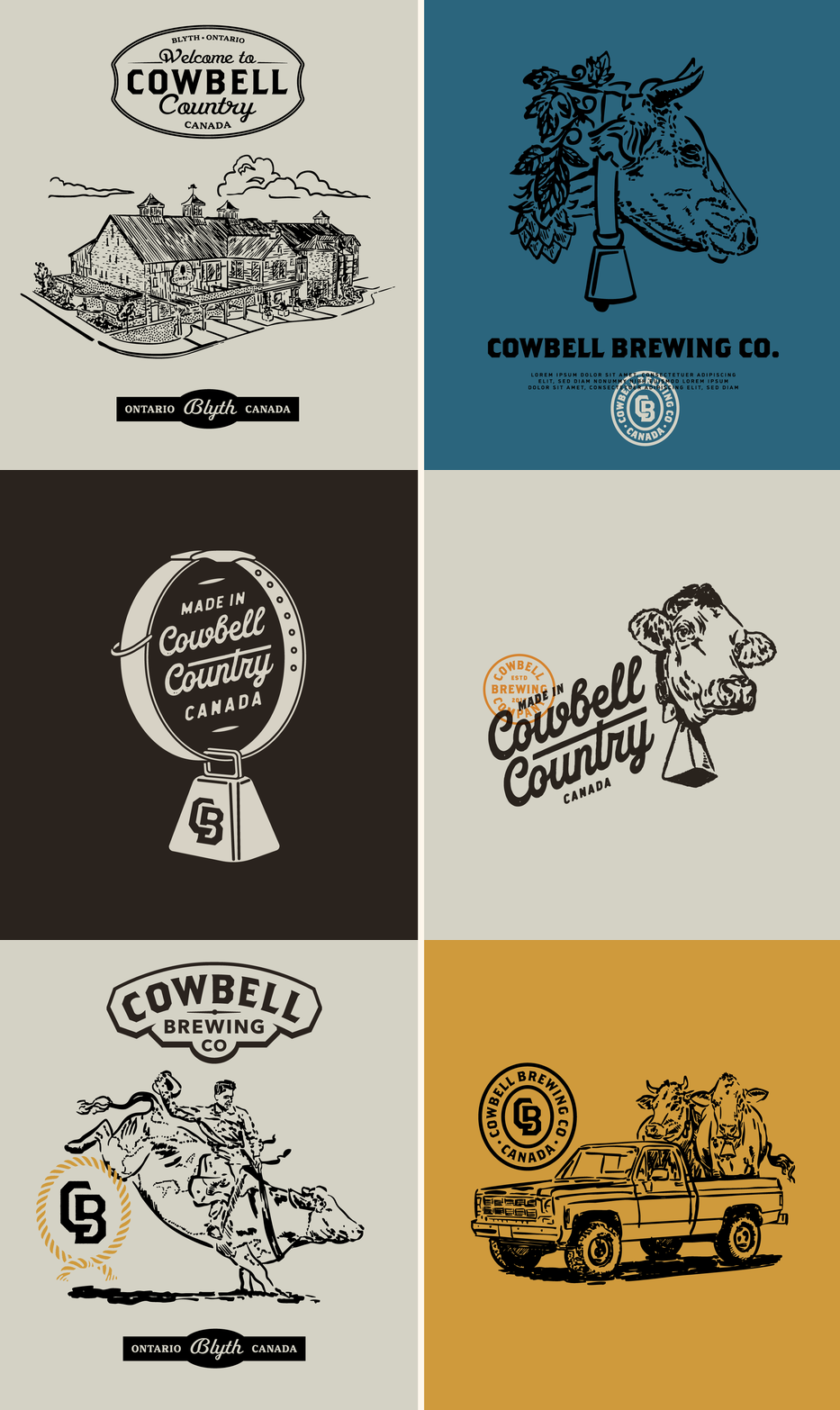
Illustration Style

We explored options from crisp and clean to rough-hewn and textural — to help the Cowbell team visualize the full spectrum of tone and voice.

Cowbell’s initial brand identity presentation. Note how we’re exploring differing levels of taglines (e.g. “Welcome to…” vs. “Made in Cowbell Country”), claims (e.g. Blyth vs. Ontario vs. Canada) and illustration styles. 

Tagline Experiments

Okay, quick detour here. 

I try not to inject myself in these stories. While I write this newsletter, I’m merely reflecting the incredible work our team at CODO and our clients do. However, I will take credit for this idea because of how resoundingly it flopped. 


Y’all-tario.


Eh? (Ehhh?)

I believed “Y’all-tario” could be a fun line. Maybe not the primary tagline, but perhaps a beer name or campaign concept. 

My team grumbled, but humored me. We mocked it up. We showed it.

Cowbell… politely declined. They understood it (not that there’s much to unpack here), but felt it wasn’t right. (Specifically, too American south vs. Canadian country.) 

And they, along with the rest of the CODO team were right.

I was wrong. (I remain devastated.) 

We can fast forward here, because the bulk of our revisions centered around dialing in illustration style, removing all unnecessary components and prepping for the package design process. 

Package Design 

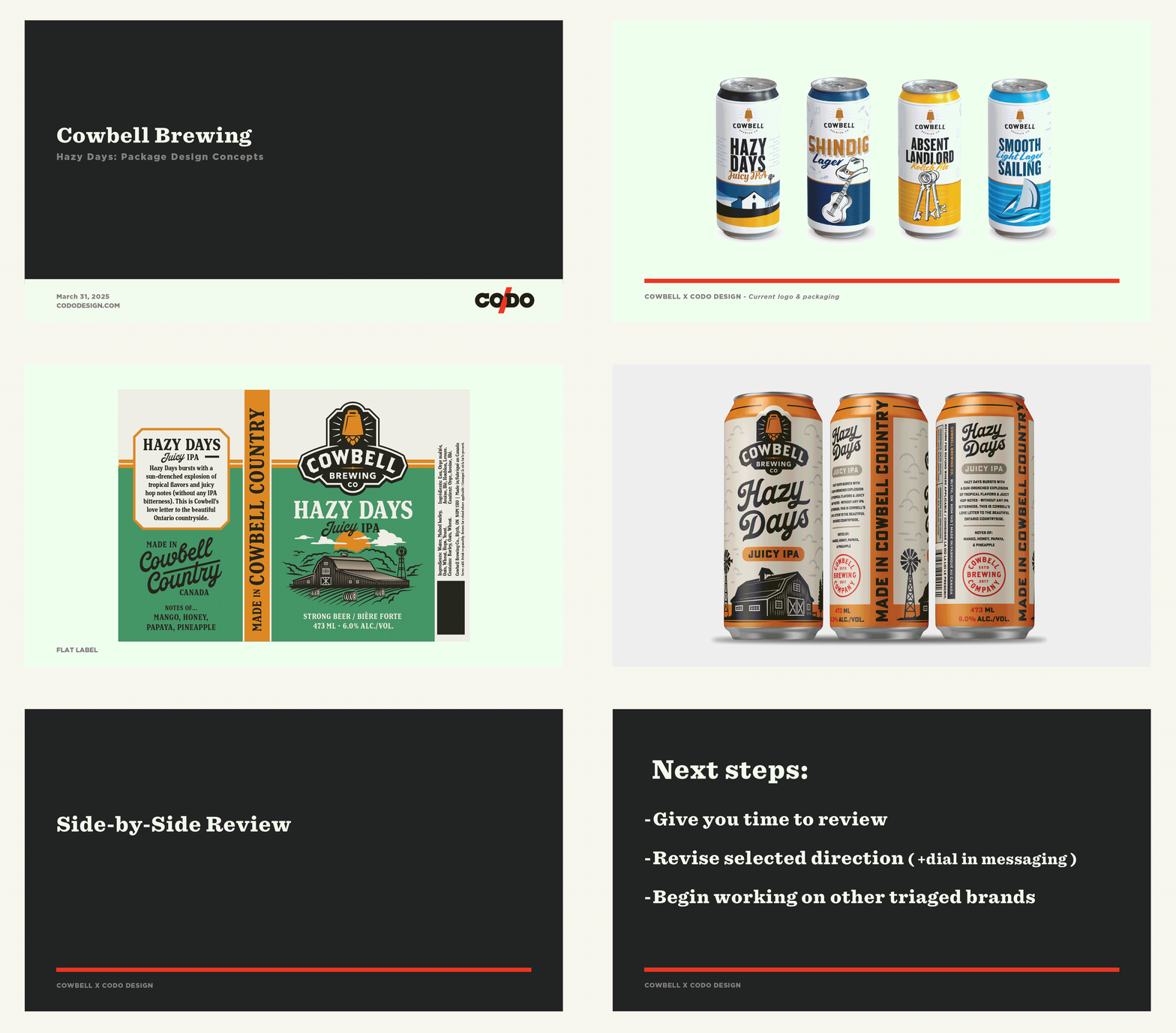
Our initial packaging concepts set us up well for revisions and dialing in the final look. We started by sketching on Cowbell’s best-selling Hazy Days. While their team loved the direction, they wanted to reel it back in a bit — closer to what they currently had in market.

That ended up being the right call. We carried forward key visual equity (primarily color) while creating room for new illustration work across the rest of the lineup.

Initial package design concepts.

Due to an expansive scope, we need up settling into a nice rhythm of sprint, share, refine, repeat. So we would share revisions of what we previously showed along with two or three new cans for consideration. The next presentation would follow the same pattern until we eventually had everything laid out and squared away. 

We can skip the four or five steps where we debated whether an illustration needed a highlight, how to bring tasting notes more on-brand or how to get this many SKUs to work together on shelf without feeling too similar in color.

Instead, I’ll just say: Everything ladders up beautifully. Each can stands on its own, while still building towards an overarching Cowbell world.

Wrapping up

This project was a lot of fun, and we’ve got much more work with the Cowbell team underway (stay tuned). 

Ultimately, this rebrand wasn’t about chasing trends or reinventing Cowbell — it was about bringing clarity to a brand that had outgrown its original system.

Through Brand Strategy, a deeper identity toolkit and a unified packaging approach, Cowbell now has a platform that reflects who they are today and supports where they’re headed next.

“Cowbell Country” isn’t just a tagline — it’s a clear POV that ties together place, quality and an aspirational sense of escape.

Most importantly, the work created alignment — internally and externally — giving their team a stronger foundation to build from for years to come.

Build a stronger brand.
Sell more beer.

Join 7,500+ other beer industry folks and sign up for CODO’s monthly Beer Branding Trends Newsletter.